


Our Clients
Description
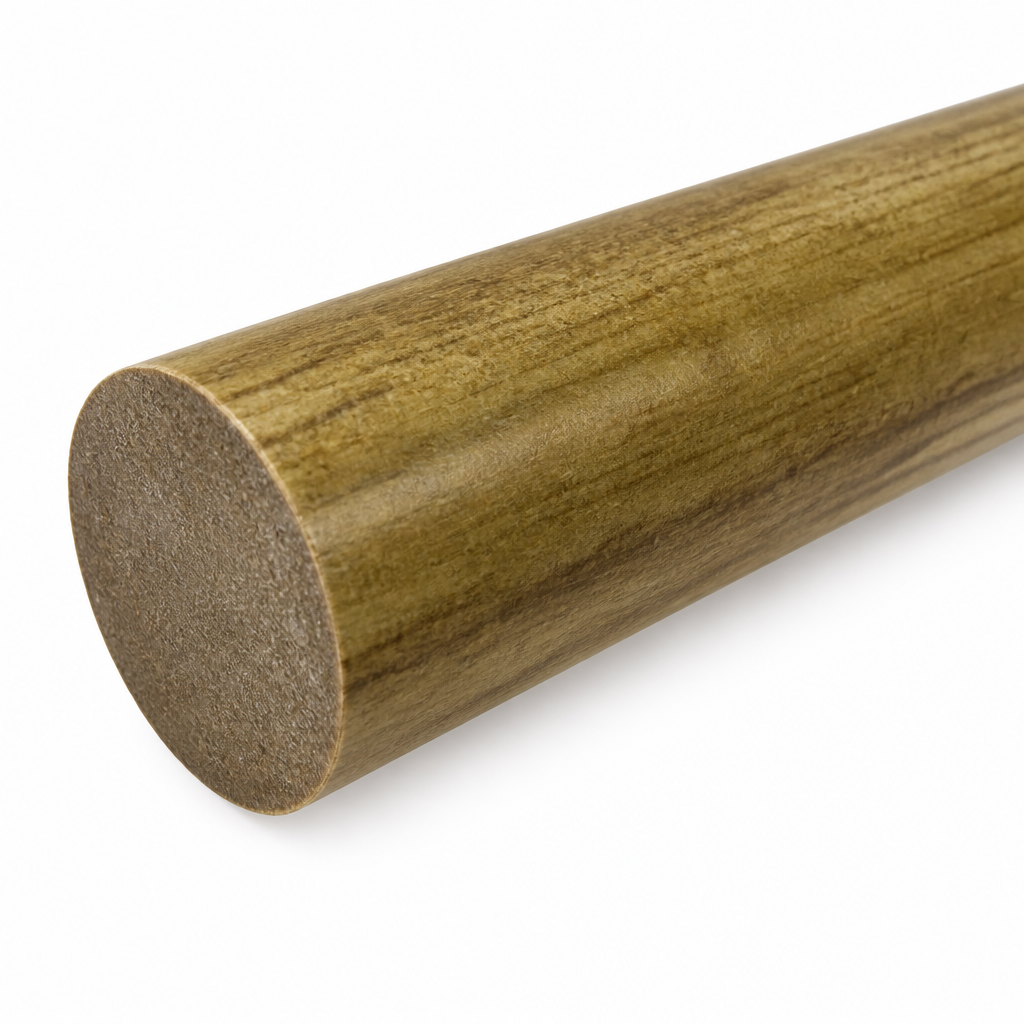
Whale Tufnol Rod is a durable cotton and phenolic resin laminated plastic. Ideal for mechanical engineering, it is used in various wear-resistant components.
Material Composition
Whale Tufnol Rod is made from medium weave cotton fabric laminated with phenolic resin. This combination creates a strong and rigid material suitable for mechanical applications.
Mechanical Properties
The rod has a density of 1.35 g/cm³, with a tensile strength of 68 MPa and a compressive strength of 310 MPa when flatwise. It maintains dimensional stability and can withstand heavy loads with minimal creep.
Thermal and Chemical Resistance
Tufnol Rod can operate continuously at temperatures up to 120°C and intermittently at 130°C. It exhibits excellent resistance to chemicals, oils, and solvents, although concentrated acids and alkalis may affect it.
Applications and Limitations
This rod is ideal for spacers, bearings, and low voltage insulation. However, it is not suitable for high voltage applications, gears, or washers due to its layered structure.
Machining and Bonding
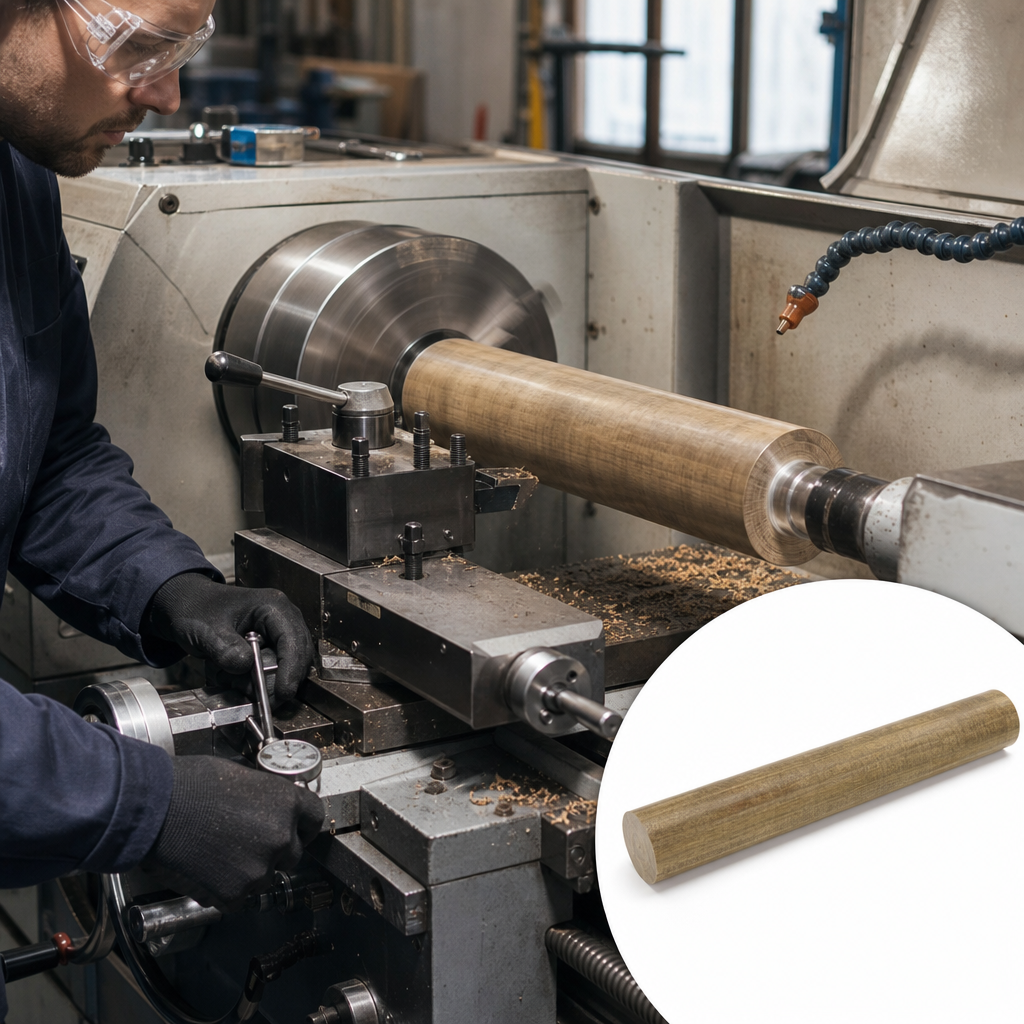
Tufnol Rod can be easily machined using standard tools. It can be bonded with adhesives like epoxy or contact adhesives, but care must be taken during machining to avoid dust.
Specifications
- Density: 1.35 g/cm³
- Tensile strength: 68 MPa
- Compressive strength (flatwise): 310 MPa
- Maximum working temperature (continuous): 120°C
- Maximum working temperature (intermittent): 130°C
- Diameter range: 6mm to 100mm
Benefits
- High strength-to-weight ratio
- Stable performance under load
- Durable in various environments
- Easy to machine and shape
- Long-lasting and reliable in mechanical applications
Use Cases
- Bearings
- Bushes
- Spacers
- Low voltage insulation
FAQ
Q: Is Tufnol Rod suitable for food applications?
A: No, Tufnol Rod should not be used in any food applications.
Q: Can Tufnol Rod be glued?
A: Yes, Tufnol Rod can be bonded with adhesives like epoxy and contact adhesives.
Q: What are the machining characteristics of Tufnol Rod?
A: Tufnol Rod can be easily machined using standard tools, but it can produce dust during machining.