


Cut to size calculator
Prices include VAT and cutting. Each piece is charged at the size step shown, so you always see exactly what you pay. Cut pieces are made to order. Delivery is calculated at checkout. For shapes, holes or large quantities, request a quote or call 01744 520110.
Description
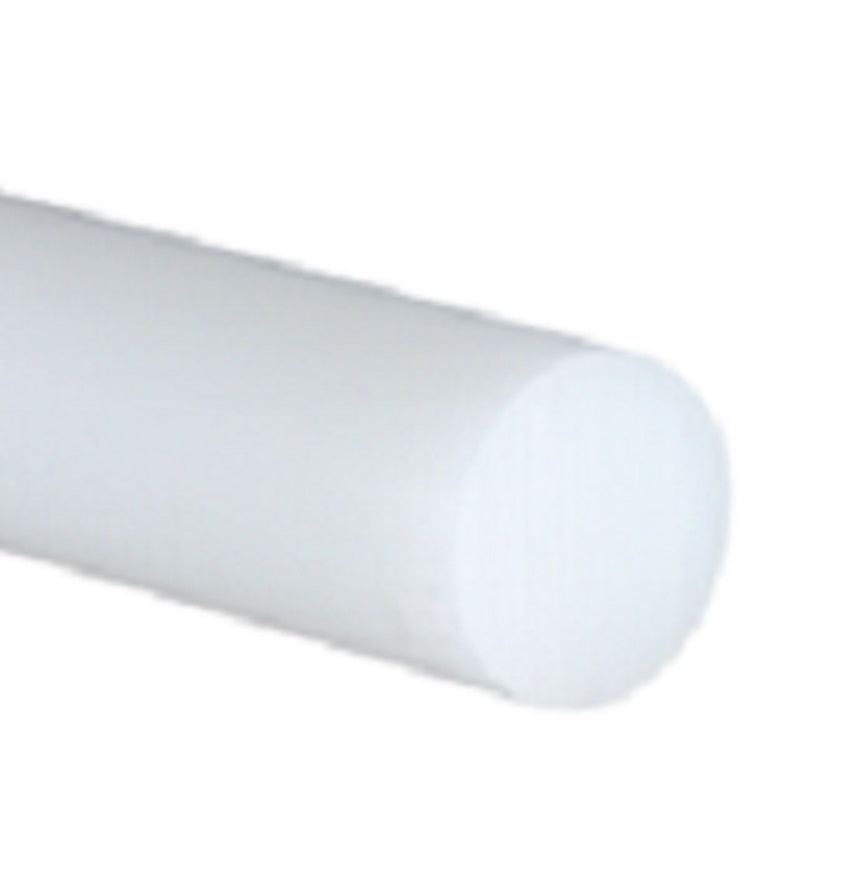
This natural polypropylene rod range offers a strong, lightweight and versatile engineering plastic suitable for a wide variety of machining and fabrication tasks. Supplied in round bar form, these rods provide an excellent balance of stiffness, chemical resistance and impact strength, making them a popular alternative to metal and other engineering plastics in many industrial environments.
Available in a wide choice of diameters from 10mm up to 225mm and in standard lengths of 500mm, 1000mm and 2000mm, these polypropylene rods are ideal for producing custom components, spacers, bushes, supports and fixtures. Their natural colour and consistent material quality ensure predictable performance in workshop, maintenance, production and prototyping applications.
Product Features
- Material: high-quality natural polypropylene (PP) engineering plastic rod.
- Diameter range: from 10mm up to 225mm to suit light-duty through to heavy-duty components.
- Length options: standard 500mm, 1000mm and 2000mm bars, including popular sizes such as 500mm x 10mm, 1000mm x 10mm and 2000mm x 10mm.
- Multiple intermediate diameter variants, including 12mm rods available in 500mm and 1000mm lengths (plus an extensive selection of further size combinations).
- Natural, unpigmented finish for easy visual inspection and suitability where colourants are not required.
- Good machinability: suitable for turning, drilling, milling and sawing with standard workshop tools.
- Supplied as solid round bar ready for cutting to length or further processing on site.
Key Features and Benefits
- Excellent chemical resistance to many acids, alkalis and solvents, making the rod suitable for use in wet, corrosive or process environments.
- Low moisture absorption helps maintain dimensional stability and performance in humid or damp conditions.
- Good impact resistance and toughness reduce the risk of brittle failure compared with some other rigid plastics.
- Lightweight alternative to metal parts, assisting with easier handling, reduced wear on mating components and potential weight savings in assemblies.
- Easy to machine, cut and shape, allowing efficient production of bespoke components and one-off parts without specialist equipment.
- Electrical insulating properties make it suitable for non-conductive spacers, mounts and guards in electrical and electronic assemblies.
Specifications
| Specification | Detail |
|---|---|
| Material | Natural polypropylene (PP) solid round rod |
| Diameter range | Approx. 10mm to 225mm (multiple intermediate diameters available) |
| Standard lengths | 500mm, 1000mm and 2000mm depending on diameter |
| Example variants | 500mm x 10mm, 1000mm x 10mm, 2000mm x 10mm, 500mm x 12mm, 1000mm x 12mm (plus numerous additional size options) |
| Colour | Natural (unpigmented) polypropylene |
| Form | Solid cylindrical rod supplied as straight lengths |
Applications and Ideal Uses
These polypropylene rods are suited to a broad range of industrial, workshop and fabrication applications where a tough, chemically resistant and easily machined plastic is required.
- Machined components such as bushes, spacers, rollers, guides and wear parts.
- Fabricated fixtures, jigs and supports for production and assembly areas.
- Components in chemical handling, fluid transfer and process plant equipment.
- Non-metallic parts for electrical and electronic assemblies requiring insulation.
- Prototyping and one-off engineering projects in maintenance and repair workshops.
Frequently Asked Questions
Can these polypropylene rods be machined with standard metalworking tools?
Yes. Polypropylene rod can be cut, drilled, turned and milled using common metalworking or woodworking tools with sharp cutters. Using appropriate speeds, feeds and support will help achieve a clean finish and minimise heat build-up.
Is natural polypropylene rod suitable for outdoor use?
Natural polypropylene offers good resistance to moisture and many chemicals, and can be used outdoors; however, prolonged exposure to direct sunlight may affect its appearance and properties over time. For long-term external use, additional UV protection or shielding is recommended.
How do I choose the correct diameter and length for my application?
Select a diameter that comfortably accommodates the finished part after machining, allowing for material removal and tolerances. Choose from 500mm, 1000mm or 2000mm lengths based on the number and size of components you intend to cut from each rod, factoring in saw kerf and any wastage.
All sizes & prices
53 sizes · prices include VAT · tap a price to select that size
Need a size that isn't listed? We cut to order. Request a quote or call 01744 520110.