


Cut to size calculator
Prices include VAT and cutting. Several pieces of the same size are cut from one piece of stock where they fit, allowing 4mm for the saw blade between pieces; the first piece is cut free and each additional piece is £1.60. Cut pieces are made to order and have a sawn finish. Delivery is calculated at checkout. For shapes, holes or large quantities, request a quote or call 01744 520110.
Description
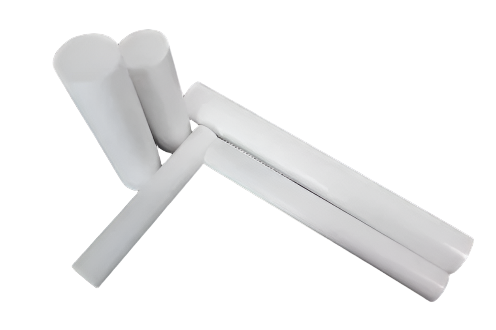
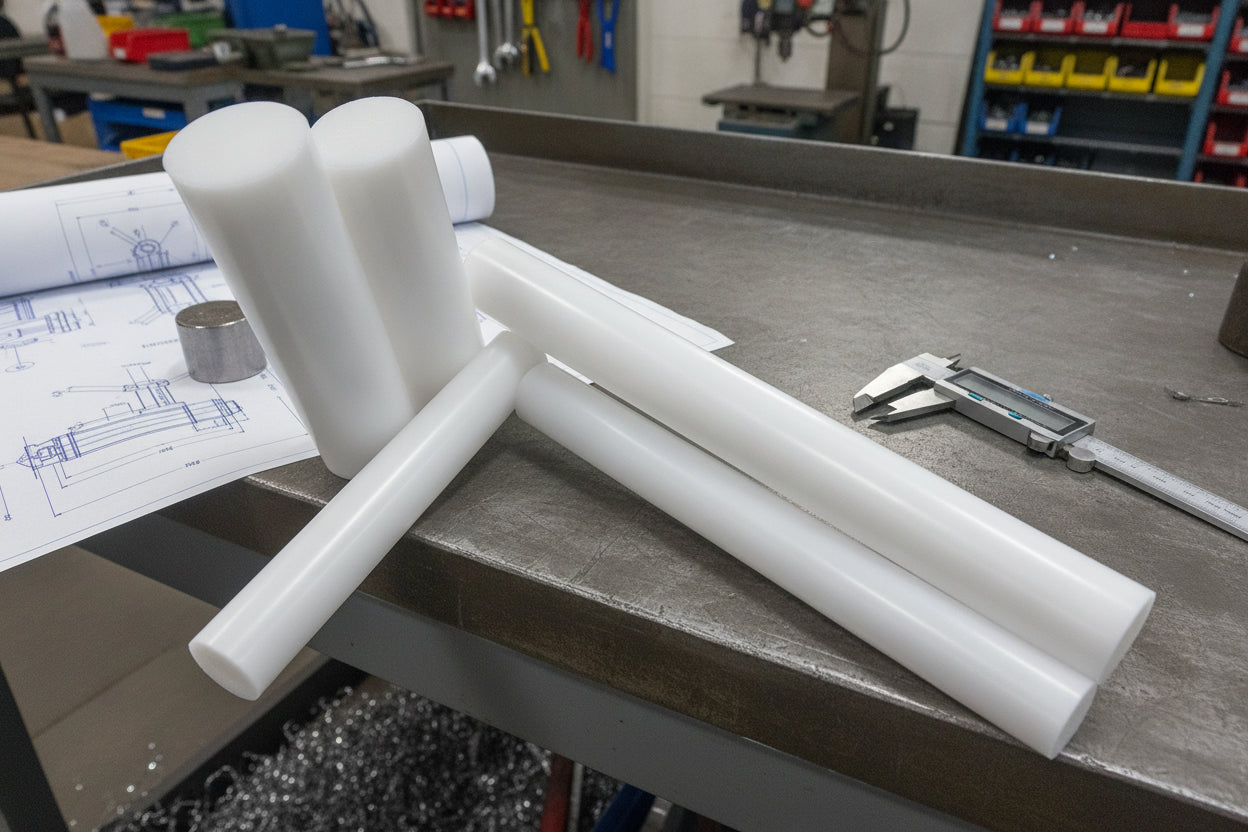
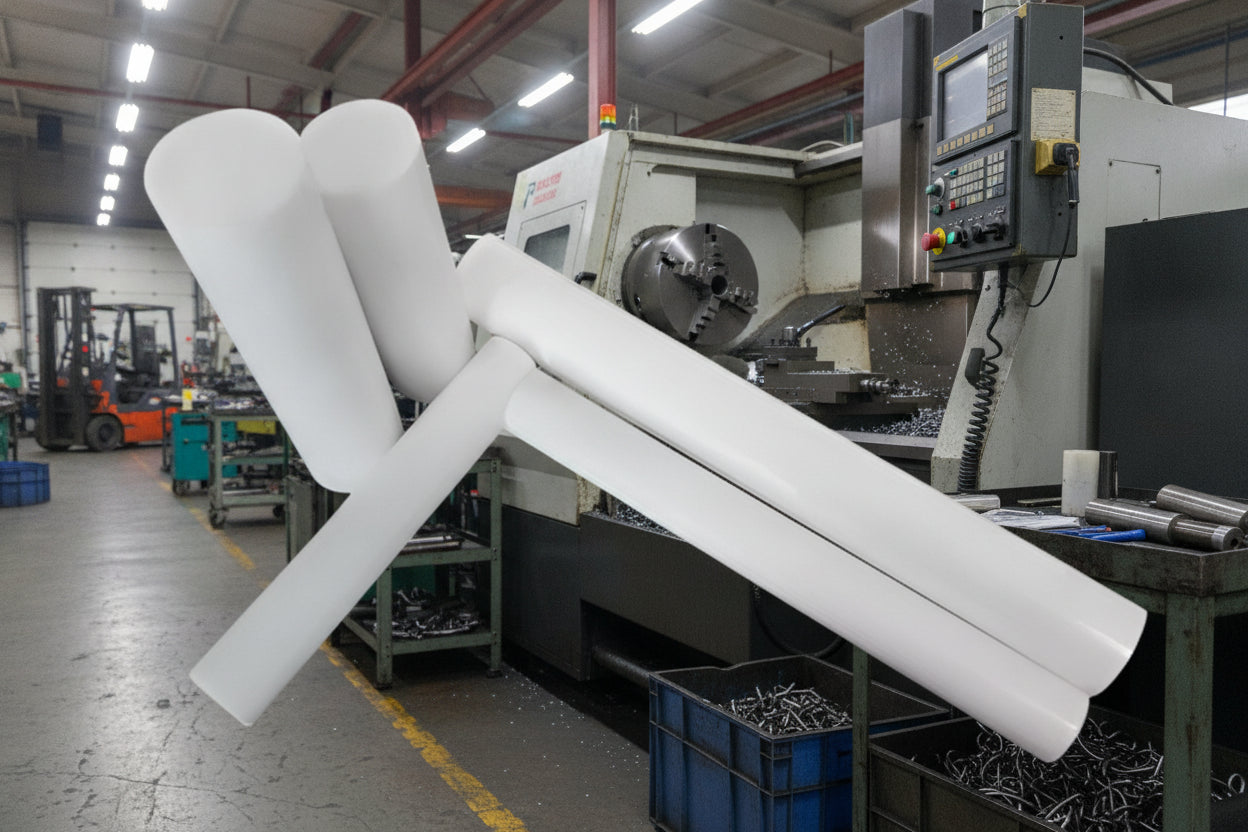
This PTFE natural rod offers outstanding chemical resistance, low friction and excellent thermal stability, making it an ideal engineering plastic for demanding applications. Manufactured from high-purity, food-grade PTFE, it provides a reliable solution for components that must withstand aggressive media, extreme temperatures and repeated mechanical movement.
Widely used in industrial, electrical and food-processing environments, these PTFE rods are suitable for machining into seals, bearings, insulators, bushes, gaskets and precision parts. Available in a wide range of diameters from 4mm up to 65mm and in standard lengths up to 2000mm, they allow you to produce custom components for both industrial and hygienic applications.
Product Features
- Material: Virgin natural PTFE (polytetrafluoroethylene) for excellent chemical and temperature resistance.
- Diameter range: Approx. 4mm to 65mm to suit small precision parts through to larger industrial components.
- Standard lengths: Common sizes include 500mm, 1000mm and 2000mm rod lengths for flexible cutting and machining options.
- High temperature performance: Stable over a wide working temperature range, typically from -200°C up to +260°C (intermittent higher possible depending on application).
- Food-contact suitable: Produced from food-grade PTFE for use in food-processing and beverage equipment where hygiene is critical.
- Electrical insulation: Excellent dielectric properties and high insulation resistance for electrical and electronic components.
- Low friction and non-stick surface: Very low coefficient of friction and anti-adhesive properties to minimise wear and product build-up.
Key Features and Benefits
- Outstanding chemical resistance ensures compatibility with most acids, alkalis, solvents and cleaning agents, reducing the risk of degradation and contamination.
- Very low friction and non-stick behaviour help to minimise wear and energy loss in moving components, extending service life and reducing maintenance.
- Wide operating temperature range makes the rod suitable for both cryogenic and high-temperature environments, supporting versatile use across many industries.
- Excellent electrical insulation and arc resistance provide a safe and stable material choice for insulators, spacers and electrical hardware.
- Food-grade composition and smooth, non-porous surface support hygienic design, easy cleaning and compliance with food-handling requirements.
- Easy to machine using standard metalworking or plastic-working tools, enabling precise custom parts and rapid prototyping.
Specifications
| Specification | Detail |
|---|---|
| Material | Virgin natural PTFE (polytetrafluoroethylene), food-grade |
| Available diameters | Approx. 4mm to 65mm (e.g. 4mm, 5mm and many additional intermediate and larger sizes) |
| Available lengths | Typically 500mm, 1000mm and 2000mm standard rod lengths |
| Temperature range | Approx. -200°C to +260°C (application dependent) |
| Colour | Natural white |
| Key properties | High chemical resistance, low friction, non-stick, good wear resistance, excellent electrical insulation |
Applications and Ideal Uses
PTFE natural rod is suited to a wide variety of machined components where durability, chemical resistance and thermal stability are essential.
- Machining into bushes, bearings, washers and seals in chemical and process plant equipment.
- Insulators, spacers and components for electrical, electronic and high-voltage applications.
- Wear strips, guides and sliding elements in mechanical assemblies and conveying systems.
- Food and beverage processing equipment parts, such as scraper blades, valve seats and guide bushes.
- Laboratory, pharmaceutical and analytical equipment components exposed to aggressive media.
Frequently Asked Questions
Can PTFE rod be machined using standard workshop tools?
Yes. PTFE rod can be machined using standard metalworking and plastic-working tools such as lathes, mills and saws. Sharp tooling and appropriate speeds and feeds are recommended to achieve clean finishes and accurate dimensions due to the material’s low hardness and tendency to deform if clamped too tightly.
Is this PTFE rod suitable for contact with food and beverages?
The rod is produced from food-grade PTFE, making it suitable for many food and beverage processing applications where non-stick, chemically inert and easy-to-clean materials are required. Always confirm that the specific grade and final machined component meet your process and regulatory requirements.
How do I choose the correct diameter and length of PTFE rod for my project?
Select a rod diameter that comfortably exceeds the largest finished dimension of your machined part, allowing for machining tolerances and any out-of-roundness. Choose a length, such as 500mm, 1000mm or 2000mm, that gives you sufficient stock for all required components while minimising waste and handling complexity.
All sizes & prices
63 sizes · prices include VAT · tap a price to select that size
Need a size that isn't listed? We cut to order. Request a quote or call 01744 520110.