


Our Clients
Description
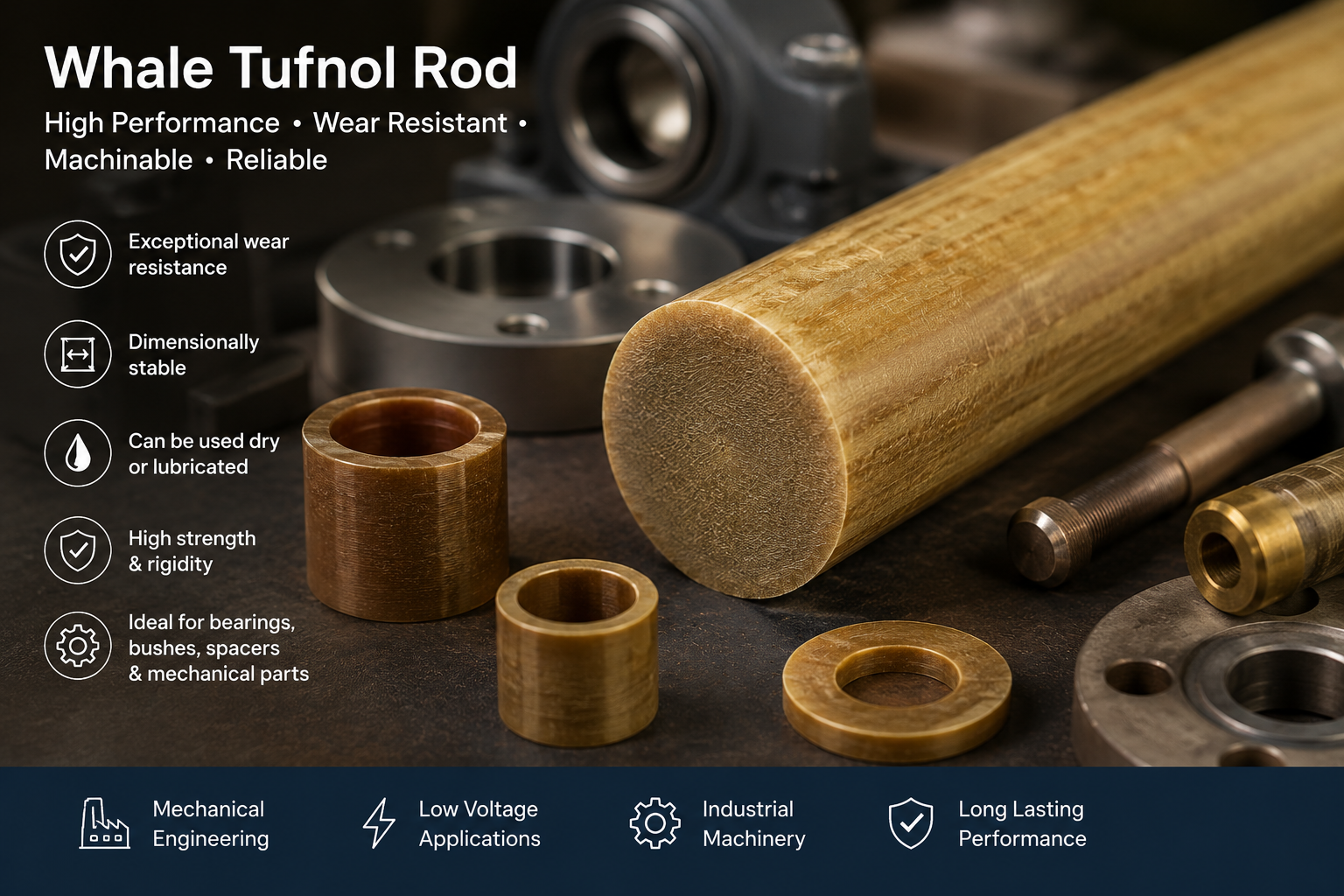
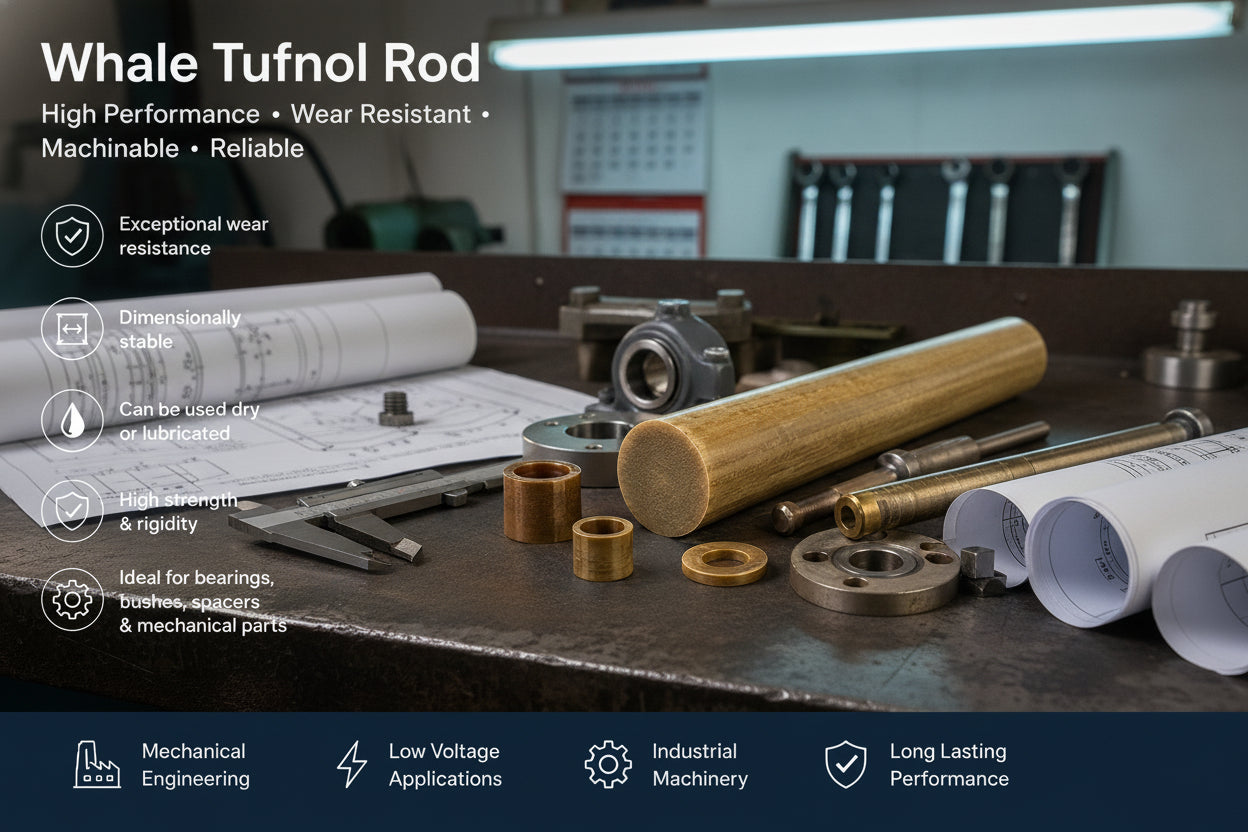
SRBF Cotton Fabric Phenolic Resin Laminate Rod
Our SRBF (Synthetic Resin Bonded Fabric) cotton phenolic laminate rod is a premium-grade engineering bar manufactured from medium-weave cotton fabric pre-impregnated with phenolic resin, then compressed under extreme pressure and heat-cured to produce an exceptionally rigid, strong and dimensionally stable round bar. Available in two diameters (90 mm and 100 mm) and three standard lengths (150 mm, 300 mm and 600 mm), this versatile material is ideal for a broad range of mechanical and low-voltage electrical engineering applications. Larger diameters up to and beyond 100 mm are available on request.
What Is SRBF Phenolic Cotton Laminate Rod?
SRBF phenolic cotton rod is a thermoset composite material. Cotton fabric sheets are pre-soaked in phenolic resin, then tightly wound and layered until the desired diameter is reached. The resulting billet is placed in a rod mould and hot-pressed under up to three tonnes of pressure before being fully cured. To put this in perspective: a finished rod of 25 mm diameter will have started life at around 35 mm before being pressed down — an indication of just how densely consolidated the final material is. This process produces a material that is highly rigid across the grain — approximately twice the stiffness of nylon — giving it superior resistance to creep under sustained mechanical load.
Performance: Why SRBF Outperforms Nylon Under Load
Because of the layered, laminated construction — much like plywood — SRBF phenolic rod has an inherent rigidity that significantly reduces creep. Consider two flanges, one machined from nylon and one from SRBF rod, both bolted down with the same torque. Over time, the nylon flange will gradually loosen as the material creeps under load — the bolts on the SRBF side stay put. For any application where dimensional stability under sustained compressive force is critical, SRBF is the superior choice.
Key Properties & Technical Data
- Material designation: SRBF – Synthetic Resin Bonded Fabric
- Grade: fabric-grade (medium weave cotton, general engineering)
- Colour: Brown / light tan
- Density: 1.35 g/cm³ (rod)
- Tensile strength: 68 MPa
- Cross-breaking strength: 130 MPa
- Compressive strength (flatwise): 310 MPa
- Compressive strength (edgewise): 200 MPa
- Maximum working temperature (continuous): 120 °C
- Maximum working temperature (intermittent): 130 °C
- Specific heat: 1.5 kJ/kg·K
- Weight: Approximately one-fifth the weight of steel; half the weight of aluminium
Advantages of SRBF Phenolic Laminate Rod
- High rigidity and strength combined with low weight
- Excellent electrical insulation at low voltages
- Good thermal insulation properties
- Maximum working temperature of 120–130 °C — higher than nylon
- Does not degrade or creep at elevated temperatures like nylon and many other engineering plastics
- Non-corrosive; can reduce corrosion in adjacent metal parts
- Excellent resistance to sustained compressive loads with minimal creep
- Outstanding weather resistance — suitable for outdoor, marine and aerospace environments
- Resistant to long-term immersion in water — does not degrade or absorb water at harmful levels
- Good resistance to chemicals, oils, solvents and hydrocarbons
- Can be lubricated with water, oil or grease, or run completely dry — ideal for water-lubricated marine bearings
- Excellent wear resistance and toughness for friction-bearing applications
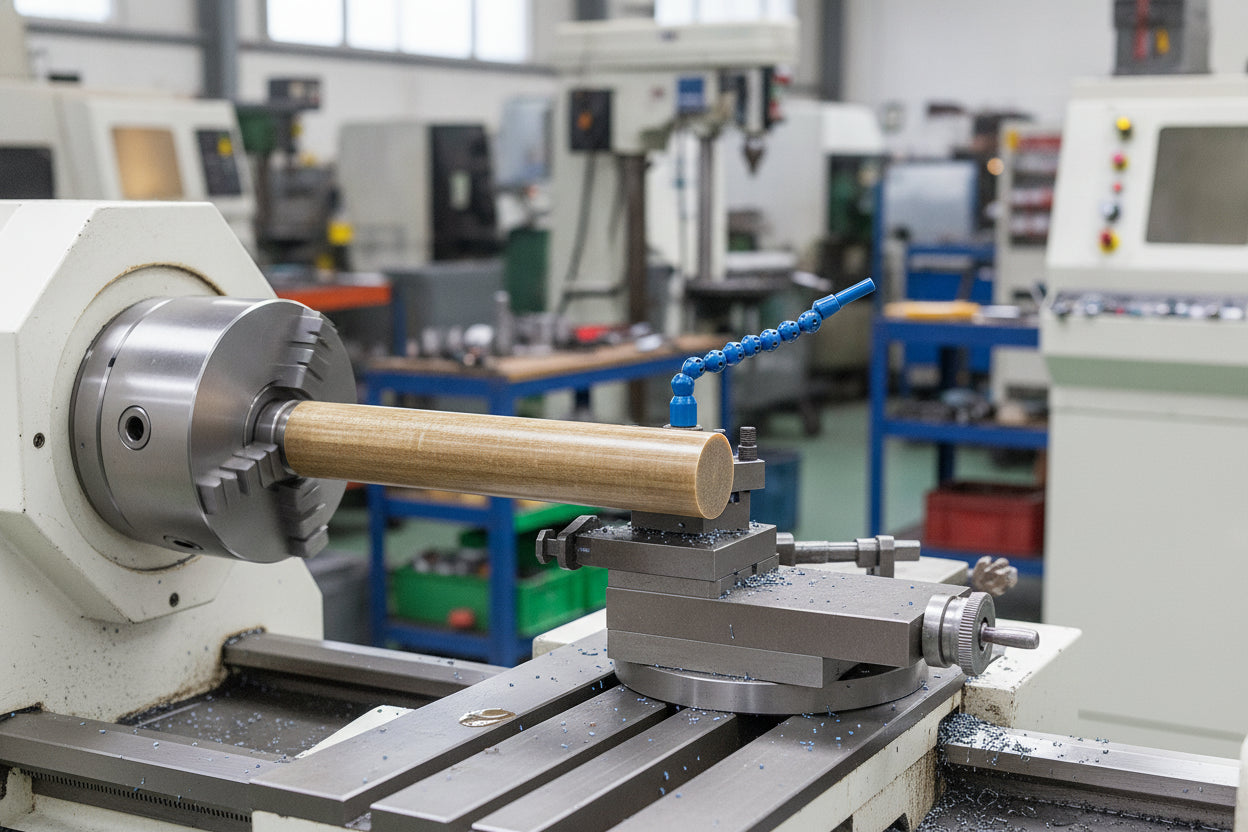
- Easily machined on conventional machine tools (lathes, mills, drills, CNC)
- Can be bonded with araldite, epoxy or contact adhesives
Typical Applications
SRBF phenolic cotton rod is widely used across mechanical engineering, electrical engineering, marine, rail and aerospace industries. Typical applications include:
- Bearings and plain bushes (including water-lubricated marine bearings)
- Spacers and distance pieces
- Rollers and guides
- Jigs and fixtures
- Wear-resistant components
- Low-voltage electrical insulation components
- Structural non-metallic parts requiring high stiffness
- Marine and offshore components
- Outdoor and aerospace structural parts requiring weather resistance
Limitations & Unsuitable Applications
- Not suitable for gears or washers — the laminated "Swiss roll" construction limits tooth and edge strength; a washer would simply push through the layers
- Not suitable for high-voltage electrical insulation or circuit board components
- Not approved for direct food contact applications
- Concentrated acids and alkalis will attack the laminate
- Produces fine dust when machined — adequate extraction is recommended; prolonged drilling may cause localised melting and bit adhesion
- Cannot be re-melted or thermoformed — all shaping must be done by machining
- Difficult to produce very intricate or delicate parts due to laminated construction
Machining and Bonding
SRBF phenolic rod cannot be re-melted or thermoformed. All finished components must be produced by machining using saws, lathes, milling machines, drills or CNC centres. Dust extraction is recommended during all machining operations. For bonding, araldite, epoxy adhesives and contact adhesives all give good results with a variety of substrate materials.
Dimensional Tolerances
Manufacturers supply engineering plastic rod slightly oversize in diameter to allow customers to machine accurate finished dimensions and remove any minor surface imperfections.
- Up to 25.0 mm nominal diameter: +0.15 mm maximum deviation
- 25.0–50.0 mm nominal diameter: +0.25 mm maximum deviation
- 50.0–75.0 mm nominal diameter: +0.30 mm maximum deviation
- 75.0–100.0 mm nominal diameter: +0.35 mm maximum deviation
Available Sizes
- 90 mm diameter × 150 mm length
- 90 mm diameter × 300 mm length
- 90 mm diameter × 600 mm length
- 100 mm diameter × 150 mm length
- 100 mm diameter × 300 mm length
- 100 mm diameter × 600 mm length