


Description
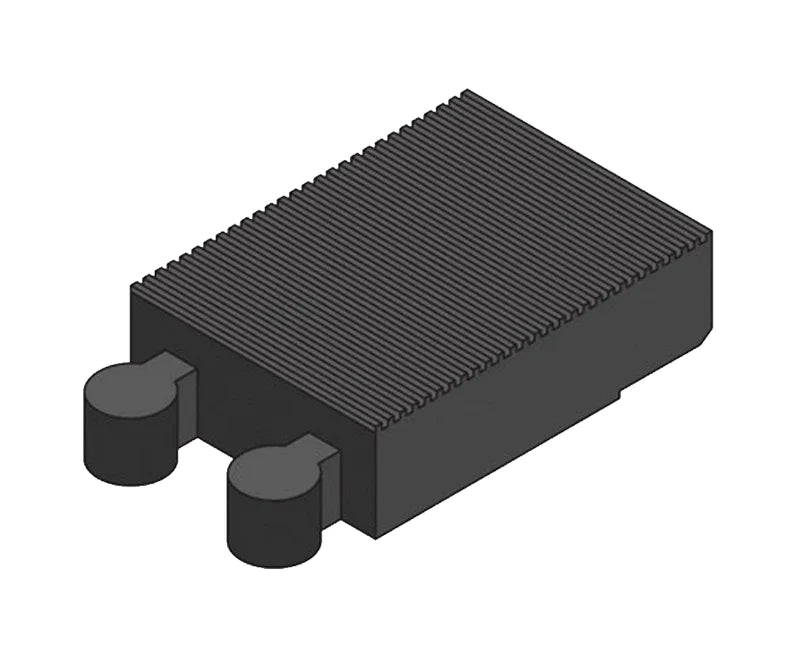
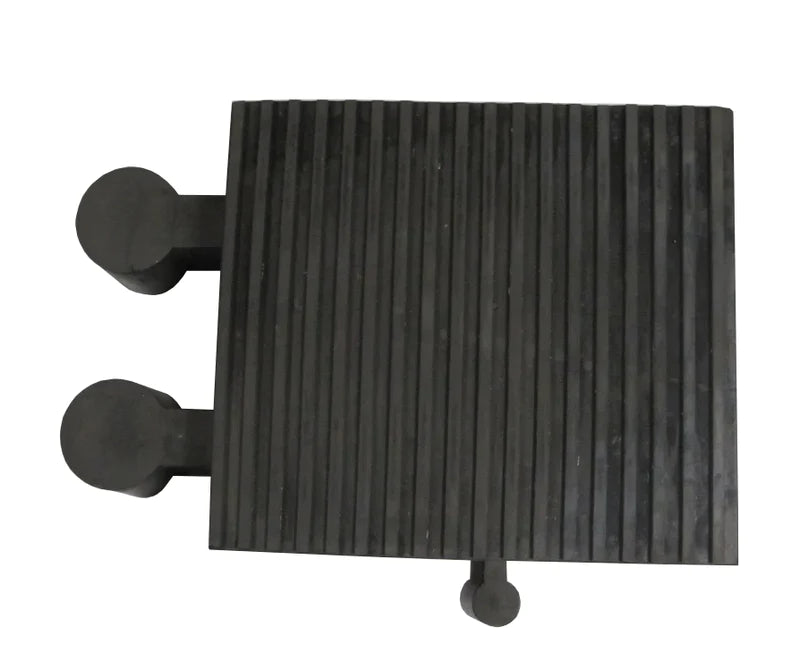
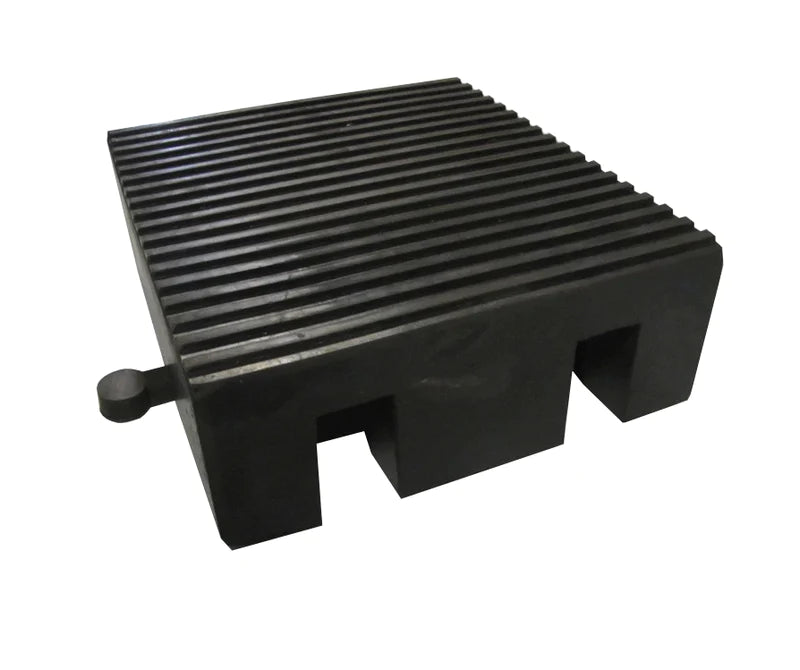
This rubber block section hose ramp provides a simple, robust solution for protecting hoses and cables from passing traffic. Manufactured from heavy-duty rubber, it creates a stable bridge for vehicles to cross while safeguarding vital lines from crushing, abrasion and general wear.
Ideal for use on construction sites, industrial yards, event venues and temporary works, this compact ramp is designed to sit securely on the ground and can be deployed quickly wherever hoses or cables need to cross vehicle routes. Its solid block section offers excellent load distribution, helping to maintain safe access routes while reducing trip hazards.
Product Features
- Single block section ramp measuring 450 x 400 x 160 mm for compact yet effective hose protection.
- Manufactured from durable, high-impact rubber for long service life in demanding environments.
- Profile designed to bridge standard hoses and cables while allowing vehicle and pedestrian traffic to pass over.
- Non-metal construction reduces noise when driven over and helps protect vehicle tyres.
- Textured rubber surface to aid grip and reduce the risk of slips in wet or oily conditions.
- Substantial weight provides stability in use without the need for permanent fixing in most installations.
- Suitable for use with a range of hose diameters commonly found on construction, utilities and event sites.
Key Features and Benefits
- Protects vulnerable hoses and cables from crushing, kinking and premature failure caused by vehicular traffic.
- Improves on-site safety by clearly defining hose crossing points and reducing trip hazards for pedestrians.
- Heavy-duty rubber construction withstands repeated loading from cars, vans and light commercial vehicles.
- Portable, compact design makes the ramp easy to reposition, store and deploy for temporary or semi-permanent works.
- Weather-resistant material performs reliably in outdoor conditions, including rain, mud and temperature changes.
- Cost-effective alternative to more complex permanent installations for temporary site services and events.
Specifications
| Specification | Detail |
|---|---|
| Product type | Rubber block section hose and cable ramp |
| Overall size | 450 x 400 x 160 mm (length x width x height) |
| Material | Heavy-duty rubber |
| Suitable media | Hoses and flexible cables for water, air, power and temporary services |
| Installation | Free-standing on flat, stable surfaces; temporary or semi-permanent use |
| Typical use environments | Construction sites, industrial yards, event spaces, maintenance areas |
Applications and Ideal Uses
This hose ramp is designed for any situation where hoses or cables must cross vehicle or pedestrian routes and require reliable physical protection.
- Construction and civil engineering sites, protecting water, fuel or air lines across access roads.
- Industrial facilities and warehouses, safeguarding temporary power and hose runs in yards and loading areas.
- Outdoor events and festivals, protecting power distribution cables and water hoses in public areas.
- Maintenance and utility works, providing temporary cable and hose protection across pavements and driveways.
- Service yards and depots, creating safer crossings for hoses used in cleaning, refuelling or pressure washing.
Frequently Asked Questions
Can this hose ramp be left in place outdoors for long periods?
Yes. The ramp is manufactured from weather-resistant rubber suitable for outdoor use. It can be left in place for extended periods, though periodic inspection is recommended to ensure it remains stable, undamaged and correctly positioned.
What types of vehicles can drive over this hose ramp?
The heavy-duty rubber construction is designed for use with cars, vans and light commercial vehicles at appropriate site speeds. For use with heavier plant or frequent heavy goods vehicle traffic, the ramp should be assessed as part of a site-specific risk assessment.
Does the ramp need to be fixed to the ground?
In many cases fixing is not necessary, as the weight and footprint of the block section provide good stability on flat, level surfaces. In high-traffic areas or where there is a risk of movement, additional measures such as positioning against kerbs or using suitable fixings may be considered subject to site conditions.
Supplying UK engineers, manufacturers and public bodies


