



Our Clients
Description
This premium silicone rubber strip is manufactured to a shore hardness of 60°, providing a dependable medium-firm material ideal for sealing, cushioning and protection tasks. Supplied in a distinctive blue colour, it offers an excellent combination of flexibility, resilience and dimensional stability for both indoor and outdoor use.
Designed for versatility, these silicone strips are available in a wide range of widths and thicknesses, with the option of adhesive backing for quick installation. Commonly used in engineering, HVAC, electrical, marine and general industrial environments, they are particularly suited to applications where reliable sealing and long-term weather resistance are essential.
Product Features
- Medium-firm 60° Shore A silicone rubber strip for balanced flexibility and support.
- Available widths from 80 mm, 85 mm, 90 mm, 95 mm, 100 mm and additional sizes to suit various sealing and edging requirements.
- Choice of thicknesses starting from 2 mm, 2.5 mm, 3 mm, 4 mm, 5 mm and further options for fine-tuning rigidity and compression.
- Optional self-adhesive backing for straightforward peel-and-stick installation, or plain non-adhesive strip for mechanical fixing.
- Durable blue silicone material for easy identification and consistent appearance in installed applications.
- Excellent resistance to weathering, ozone and UV, ideal for long-term outdoor or exposed environments.
- Good temperature stability typical of silicone rubber, suitable for a wide range of service conditions.
Key Features and Benefits
- Provides a reliable seal against air, dust and moisture, helping to improve performance and reduce maintenance in assemblies and enclosures.
- Medium hardness material compresses sufficiently for a tight fit while retaining shape, extending service life and reducing the need for frequent replacement.
- Adhesive-backed option reduces installation time and avoids additional fixings, especially useful on smooth metal, plastic or painted surfaces.
- Weather-resistant silicone construction maintains flexibility and integrity when exposed to sunlight, rain and temperature variations.
- Range of widths and thicknesses allows accurate selection to match grooves, flanges or gaps, minimising trimming and waste on site.
- Non-corrosive and inert material that is suitable for use alongside metals, plastics and many other construction materials.
Specifications
| Specification | Detail |
|---|---|
| Material | Silicone rubber, blue |
| Hardness | 60° Shore A (approx.) |
| Available widths | 80 mm, 85 mm, 90 mm, 95 mm, 100 mm plus additional width options |
| Available thicknesses | 2 mm, 2.5 mm, 3 mm, 4 mm, 5 mm plus further thickness options |
| Adhesive backing | Plain (non-adhesive) or self-adhesive backed |
| Typical use | Gaskets, seals, edging, cushioning and protective strip applications |
Applications and Ideal Uses
This silicone rubber strip is suited to a wide variety of sealing, protection and insulation tasks across industrial, commercial and workshop environments.
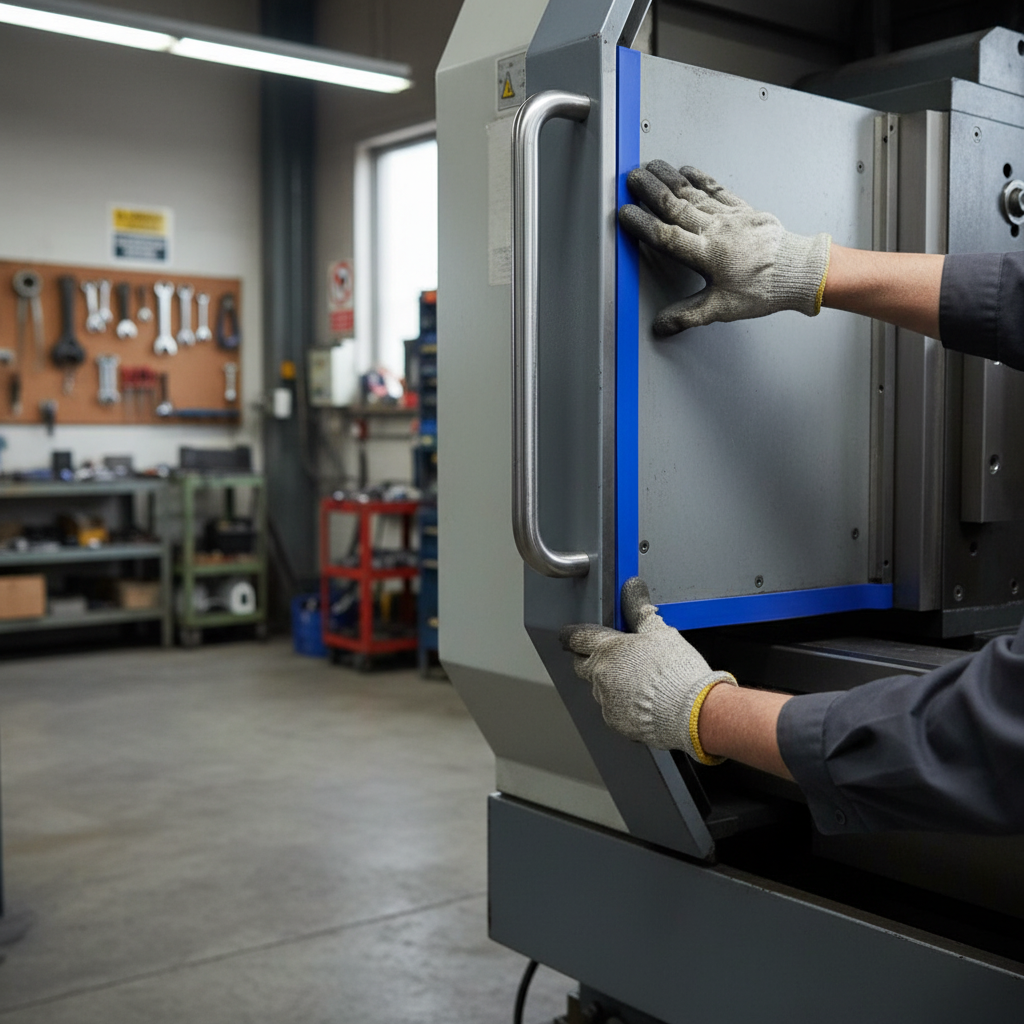
- Door and hatch seals on machinery, cabinets and enclosures to reduce dust and draught ingress.
- Edge protection and cushioning for panels, sheet metal and glazed units.
- Gasket material for flanges and joints in HVAC, ducting and ventilation systems.
- Vibration-damping and spacing strips in equipment assemblies and support frames.
- Weather seals around access panels, inspection covers and control boxes in outdoor installations.
Frequently Asked Questions
Can I cut the silicone rubber strip to custom lengths?
Yes, the strip can be cut to length using a sharp knife or suitable cutting tool. For the best results, use a straight edge and make clean, even cuts to ensure a good seal when installed.
Is the adhesive-backed version suitable for outdoor use?
The adhesive backing is designed for general-purpose bonding and will perform well on clean, dry, smooth surfaces. For demanding or permanently wet outdoor conditions, additional mechanical fixing or a suitable sealant may be advisable.
How do I choose the right width and thickness for my application?
Measure the gap or surface area you need to seal or protect, then select a width that comfortably covers it with some margin. Choose a thickness that will compress slightly under load while maintaining contact; softer, thinner strips suit lighter sealing tasks, while thicker sections provide greater support and cushioning.