



Our Clients
Description
This premium PPSU 3D printing filament is an advanced engineering-grade material designed for demanding technical applications. Offering excellent dimensional stability, high heat and chemical resistance, and precise diameter control, it delivers consistent, high-quality prints for professional users and industrial environments.
Supplied on 1 kg spools in 1.75 mm diameter, this filament is ideal for engineers, prototyping departments and small-batch production where strength, reliability and low emissions are essential. Available in Natural and Black 9005, it is well suited to functional parts, fixtures, housings and components that must perform in challenging conditions.
Product Features
- Material: engineering-grade polyphenylsulfone (PPSU) filament for high-performance printing
- Diameter: 1.75 mm filament with tight manufacturing tolerances for accurate extrusion
- Spool weight: supplied on 1000 g spools to support longer, uninterrupted print runs
- Colour options: available in Natural for visual inspection of part quality and Black 9005 for a clean, professional finish
- High chemical resistance suitable for contact with oils, fuels and many industrial fluids
- High heat resistance for applications requiring thermal stability under elevated temperatures
- Low emission formulation designed to minimise odour and fume generation during printing
Key Features and Benefits
- Maintains mechanical strength and dimensional accuracy under load, supporting reliable functional parts rather than purely visual prototypes.
- Excellent resistance to many chemicals and cleaning agents, extending service life in harsh industrial and laboratory environments.
- Low emission formulation helps reduce odour and airborne particulates for a more pleasant and controlled printing environment.
- Consistent 1.75 mm diameter ensures smooth feeding, improved layer adhesion and reduced risk of under- or over-extrusion.
- High heat deflection performance allows printed components to be used near machinery, equipment and processes operating at elevated temperatures.
- Available in both Natural and Black 9005, giving flexibility for visual inspection, light transmission requirements or discreet, professional-looking finished parts.
Specifications
| Specification | Detail |
|---|---|
| Material | PPSU (polyphenylsulfone) engineering thermoplastic filament |
| Filament diameter | 1.75 mm nominal (tight tolerance for stable extrusion) |
| Spool weight | 1000 g (1 kg) net filament weight |
| Colour options | Natural; Black 9005 |
| Key properties | High chemical resistance, high heat resistance, low emission, good dimensional stability |
| Recommended use | Professional and industrial 3D printing with compatible high-temperature printers |
Applications and Ideal Uses
This PPSU filament is tailored for technical and industrial applications where strength, durability and resistance to harsh conditions are critical.
- Functional prototypes and end-use components that must withstand elevated temperatures and mechanical stress.
- Industrial jigs, fixtures and tooling used in manufacturing, assembly and testing environments.
- Enclosures, housings and brackets for electrical, electronic and mechanical equipment.
- Laboratory, medical and analytical equipment components where chemical resistance is important.
- Automotive, aerospace and transport-related parts for testing, validation and small-series production.
Frequently Asked Questions
Do I need a special 3D printer to use this PPSU filament?
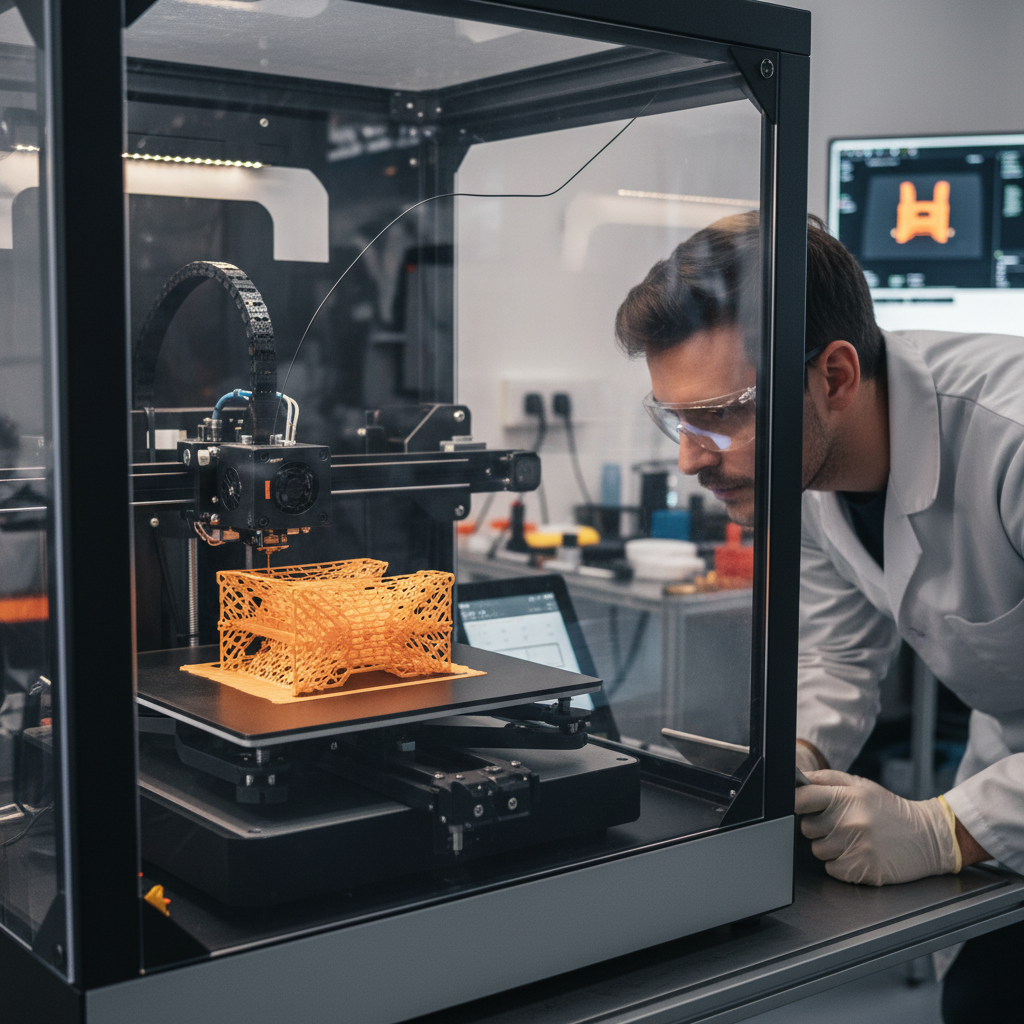
Yes. PPSU is a high-temperature engineering plastic and must be printed on a compatible printer with a high-temperature hotend, heated bed and, ideally, an enclosed build chamber. Always check your printer’s maximum temperature ratings before use.
What print settings are recommended for PPSU filament?
Exact settings will depend on your printer, but PPSU typically requires a high nozzle temperature, a heated bed and reduced cooling to promote good layer adhesion. It is advisable to start with conservative speeds, use an enclosure if available, and refine settings with small test prints.
Is this filament suitable for outdoor or chemically exposed applications?
This PPSU filament offers good resistance to many chemicals, cleaning agents and elevated temperatures, making it suitable for demanding environments. However, performance will depend on the specific chemicals, exposure conditions and part design, so testing under real conditions is recommended before critical use.