

Our Clients
Description
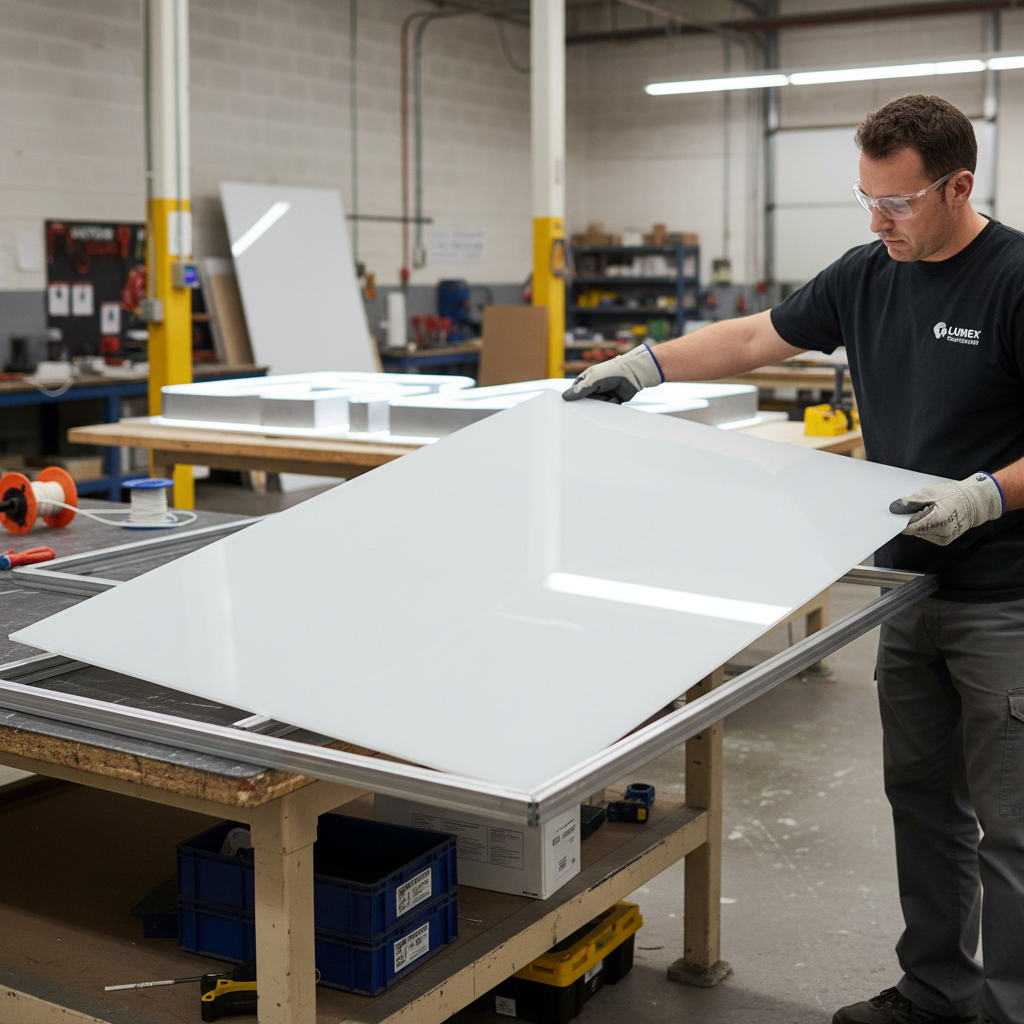
Premium high-performance PETG opal sheets offer a durable, impact-resistant and easily thermoformed solution for demanding engineering applications. Manufactured from PETG (polyethylene terephthalate glycol), these opal white sheets provide excellent optical diffusion, making them ideal where a clean, hygienic appearance and controlled light transmission are required.
With enhanced thermoforming capabilities, these PETG opal sheets are specifically suited to complex moulded components in vending machines and medical appliances. Their consistent thickness, high clarity through the opal finish, and reliable performance under heat-forming conditions make them a dependable choice for high-precision, production-critical environments.
Product Features
- High-performance PETG opal sheet construction for demanding engineering applications.
- Available in a practical thickness of 3 mm, ideal for robust formed panels and covers.
- Generous sheet length of 3050 mm to maximise yield and minimise waste during cutting.
- Sheet width of 2050 mm, suitable for larger panels and multi-part nesting.
- Opal white finish offering controlled light diffusion and a clean, hygienic look.
- Enhanced thermoforming characteristics for detailed, repeatable moulding.
- Excellent impact resistance and toughness compared with standard acrylic sheet.
Key Features and Benefits
- Enhanced thermoformability reduces forming temperatures and cycle times, improving production efficiency and consistency.
- Superior impact strength helps resist cracking, chipping and breakage in busy public and clinical environments.
- Opal diffusion provides privacy and soft, uniform lighting, improving user comfort and display appearance.
- Good chemical resistance allows for regular cleaning and disinfection in medical and food-contact areas.
- Lightweight compared with glass, making installation, handling and transport safer and easier.
- Excellent dimensional stability ensures accurate fit for machine housings, covers and moulded components.
Specifications
| Specification | Detail |
|---|---|
| Material | PETG (polyethylene terephthalate glycol), opal white sheet |
| Thickness | 3 mm (nominal) |
| Sheet Length | 3050 mm |
| Sheet Width | 2050 mm |
| Forming Method | Suitable for vacuum forming, drape moulding and thermoforming |
| Typical Applications | Vending machine fascias, light panels, medical equipment covers, protective screens |
Applications and Ideal Uses
These PETG opal sheets are designed for precision thermoformed and fabricated parts where strength, hygiene and visual performance are critical.
- Vending machine fronts, control panels and illuminated display sections.
- Medical and laboratory equipment housings, covers and fascia panels.
- Protective guards and shields in healthcare, retail and public spaces.
- Light diffusers and backlit panels requiring an opal finish.
- Custom-formed machine panels and enclosures in industrial environments.
Frequently Asked Questions
Can these PETG opal sheets be thermoformed using standard vacuum forming equipment?
Yes, the sheets are specifically designed for enhanced thermoforming performance and are suitable for use with standard vacuum forming and thermoforming machinery. They soften uniformly, allowing for detailed moulding with good definition and repeatable results.
Are the sheets suitable for regular cleaning in medical and vending machine environments?
Yes, PETG offers good resistance to many commonly used cleaning agents and disinfectants, making these sheets well suited to environments where regular cleaning is required. Always check chemical compatibility and avoid highly aggressive solvents that may cause stress cracking.
Can the sheets be cut and fabricated after forming?
Yes, the sheets can be cut, trimmed and drilled using appropriate tools both before and after thermoforming. Standard plastic fabrication techniques can be used, such as sawing and routing, while ensuring sharp tooling and correct feed rates to achieve clean edges.