



Our Clients
Description
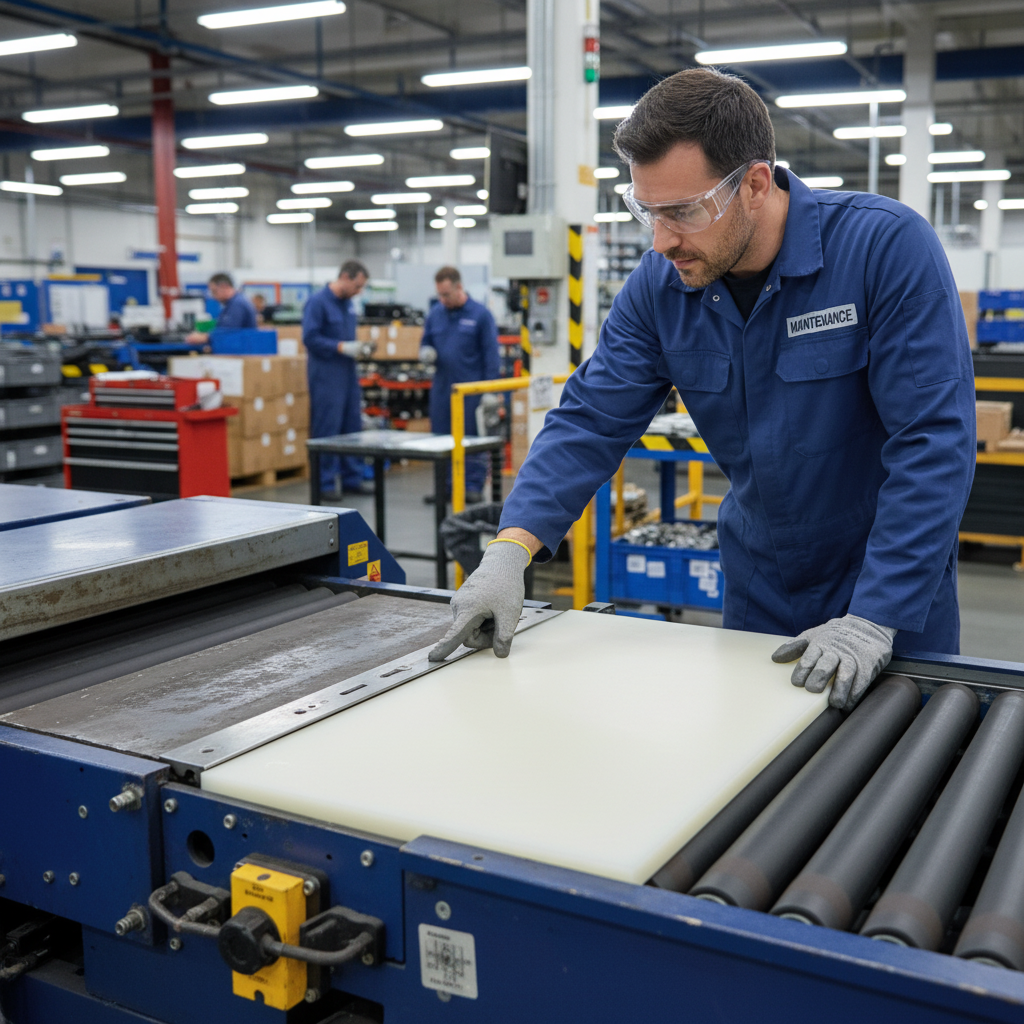
This premium Nylon 66 extruded natural sheet is a high-performance engineering plastic designed for demanding mechanical and industrial applications. Offering an excellent balance of strength, rigidity and wear resistance, it is an ideal replacement for metal in many components where reduced weight and superior machinability are required.
With high chemical resistance, low moisture absorption and outstanding dimensional stability, this Nylon 66 sheet maintains its properties in challenging environments. Available in a range of popular thicknesses from 0.5 mm upwards, and in standard 1000 mm width with 1000 mm or 2000 mm lengths, it is well suited to precision parts, wear components, insulators and structural elements across a wide range of industries.
Product Features
- Manufactured from high-quality extruded Nylon 66 for superior mechanical strength and rigidity.
- Natural (unfilled, uncoloured) finish suitable for machining, further processing or inspection of machined surfaces.
- Available thicknesses from 0.5 mm, 1 mm, 1.5 mm, 2 mm, 2.5 mm and additional thicker options to suit light-duty shims through to robust structural parts.
- Standard sheet width of 1000 mm for easy nesting of components and efficient material usage.
- Choice of sheet lengths: 1000 mm or 2000 mm to reduce joints and optimise cutting layouts.
- Low moisture absorption and high dimensional stability help maintain tight tolerances in service.
- Good resistance to oils, greases, fuels and many chemicals commonly found in industrial environments.
Key Features and Benefits
- Excellent dimensional stability: Low moisture uptake and controlled extrusion produce sheets that hold their shape, supporting accurate machining and reliable fit of finished parts.
- High mechanical strength: Combines high tensile and impact strength with good stiffness, enabling weight-saving substitution for metal in many applications.
- Superior wear and abrasion resistance: Ideal for sliding and bearing components, extending service life and reducing maintenance downtime.
- Chemical and oil resistance: Performs well in contact with lubricants, fuels and many industrial chemicals, making it suitable for harsh operating conditions.
- Good machinability: Can be readily sawn, drilled, turned and milled using conventional equipment, allowing cost-effective production of complex parts.
- Versatile thickness range: Multiple sheet thickness options support use as shims, spacers, wear plates, guards and structural components from a single material family.
Specifications
| Specification | Detail |
|---|---|
| Material | Extruded Nylon 66 (polyamide 66), natural |
| Available thicknesses (mm) | 0.5, 1, 1.5, 2, 2.5 plus additional thicker options |
| Sheet width (mm) | 1000 |
| Sheet lengths (mm) | 1000, 2000 |
| Moisture absorption | Low, for enhanced dimensional stability versus standard polyamides |
| Typical colour | Natural (off-white) |
Applications and Ideal Uses
This Nylon 66 extruded sheet is suitable for a wide range of precision-engineered components where strength, wear resistance and dimensional stability are essential.
- Wear strips, guides, bushes and bearing plates in conveyors and materials-handling systems.
- Precision machined components, spacers, shims and fixtures in mechanical engineering.
- Gears, sprockets and structural parts in machinery where weight reduction is desirable.
- Insulating plates, mounting panels and non-conductive parts in electrical and electronic equipment.
- Custom guards, covers and structural elements in plant and equipment fabrication.
Frequently Asked Questions
Can this Nylon 66 sheet be machined using standard workshop tools?
Yes. The sheet can be sawn, drilled, turned and milled using conventional metalworking or woodworking tools with appropriate sharp cutters and support. Coolant or air blast is recommended when machining thicker sections to manage heat and achieve a good surface finish.
Is the natural Nylon 66 sheet suitable for outdoor use?
The material offers good mechanical and wear performance, but like most standard nylons it has limited resistance to prolonged UV exposure. For long-term outdoor applications, additional UV protection or an alternative weather-stabilised grade may be preferable.
How should I choose the correct sheet thickness for my application?
Select the thickness based on the mechanical load, span and function of the part. Thinner sheets from 0.5 mm to 2.5 mm are generally used for shims, spacers and light-duty components, while the thicker options are better suited to load-bearing parts such as wear plates, guides and structural elements. If in doubt, consider expected loads and deflection, and allow a suitable safety margin.