


Our Clients
Description
This premium high impact polystyrene (HIPS) sheet in yellow offers an excellent balance of impact resistance, rigidity and ease of fabrication, making it a versatile choice for demanding industrial environments. Available in both gloss and matt finishes, it delivers a professional appearance alongside robust mechanical performance.
Engineered for reliability in sectors such as food processing, automotive, signage and general engineering, this HIPS sheet is ideal for guards, panels, covers and formed components. Its combination of dimensional stability, good chemical resistance and consistent colour makes it particularly suitable where both visual impact and durability are essential.
Product Features
- Material: high impact polystyrene (HIPS) for enhanced toughness and mechanical strength.
- Surface finish options: choice of smooth gloss or low-sheen matt yellow surfaces to suit functional and aesthetic requirements.
- Thickness range: available in 1.5 mm, 2 mm and 3 mm to accommodate lightweight cladding through to more rigid structural panels.
- Sheet lengths: supplied in standard lengths of 1372 mm, 1830 mm and 1980 mm for flexible layout and nesting.
- Sheet widths: choose from 660 mm, 1220 mm or 1372 mm widths to minimise waste and optimise cutting plans.
- Uniform yellow colour: high-visibility yellow for safety-critical environments and easy identification of guarded areas.
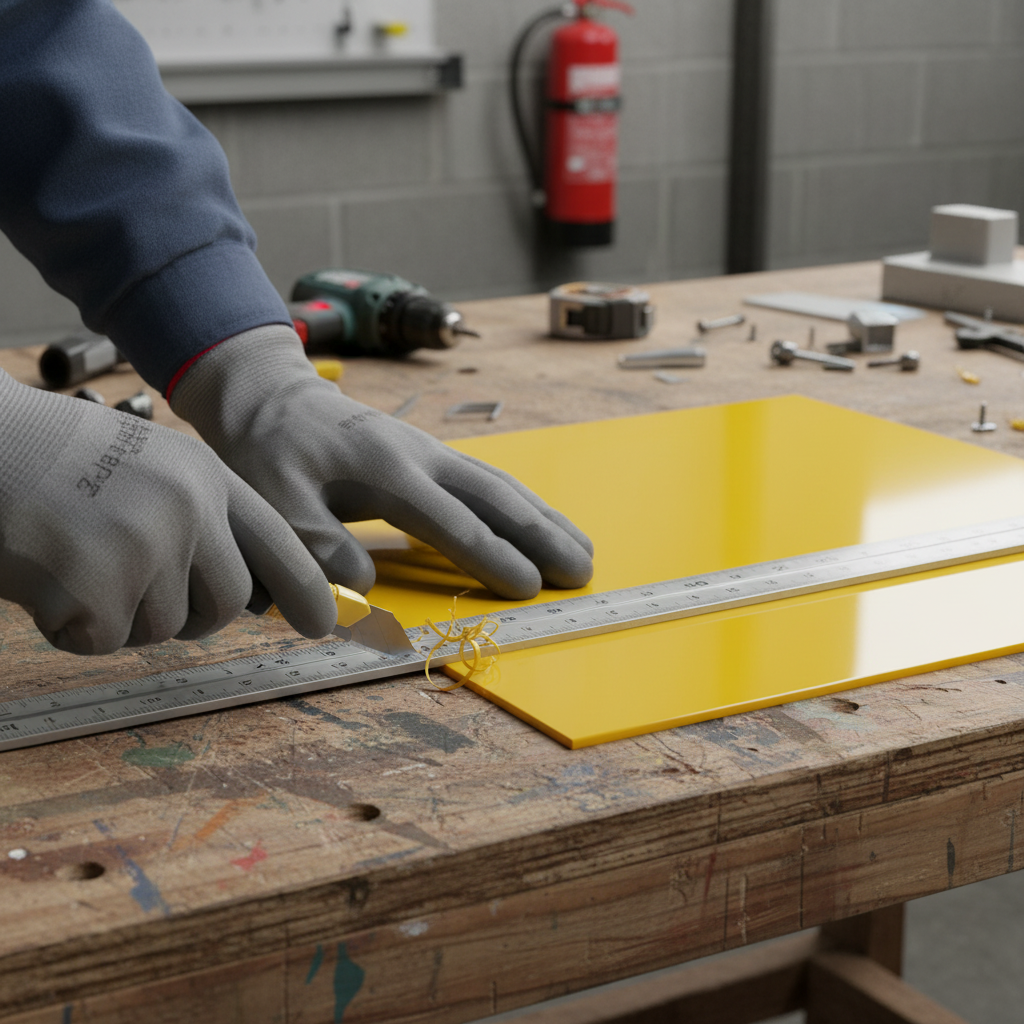
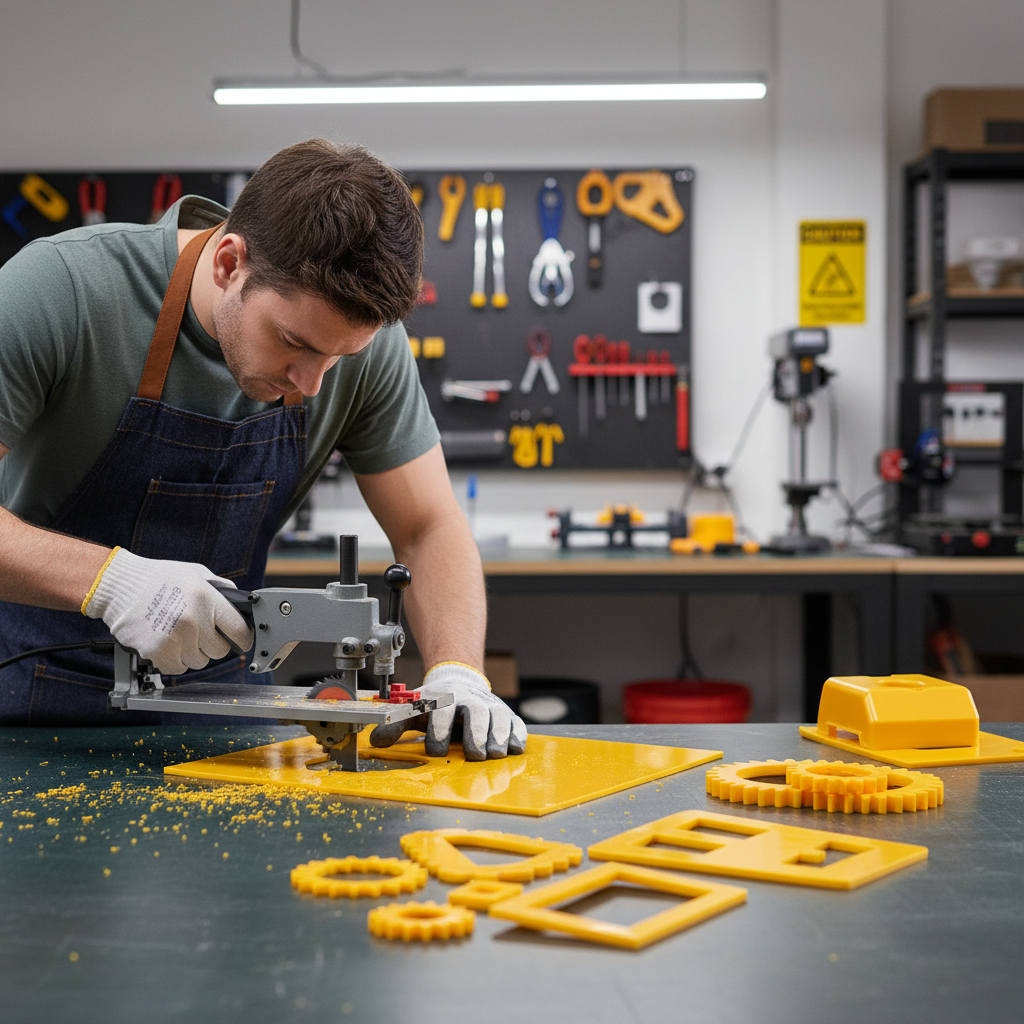
- Process-friendly: suitable for cutting, drilling, routing, thermoforming and bonding with appropriate tools and adhesives.
Key Features and Benefits
- Excellent impact resistance helps protect machinery, operators and components in busy industrial and automotive environments.
- Good rigidity and dimensional stability ensure panels stay flat and components maintain their shape after forming.
- Food-contact suitability (when specified grade is used) supports use in food processing guards, splashbacks and equipment cladding.
- Choice of gloss or matt finish allows optimisation for easy cleaning, appearance or glare reduction as required.
- Easy to machine and fabricate, reducing production time and tooling wear compared with many alternative engineering plastics.
- Consistent colour and surface quality improve finished product appearance and simplify quality control across batches.
Specifications
| Specification | Detail |
|---|---|
| Material | High Impact Polystyrene (HIPS) |
| Colour | Yellow |
| Surface Finish | Gloss or matt, single-side finish depending on selected variant |
| Available Thicknesses | 1.5 mm, 2 mm, 3 mm |
| Standard Sheet Lengths | 1372 mm, 1830 mm, 1980 mm |
| Standard Sheet Widths | 660 mm, 1220 mm, 1372 mm |
Applications and Ideal Uses
This yellow HIPS sheet is widely used for protective panels, formed components and display elements in industrial and transport settings, where a durable, easy-to-fabricate plastic is required.
- Machine guards, safety screens and equipment covers in food processing and packaging plants.
- Interior trim parts, panels and protective covers in automotive and commercial vehicle manufacture.
- Control panel fascias, instrument housings and enclosure liners in engineering workshops.
- Point-of-sale displays, signage backings and high-visibility information boards.
- Protective cladding, liners and partitioning in factories, warehouses and service areas.
Frequently Asked Questions
Is this yellow HIPS sheet suitable for direct contact with food products?
Certain HIPS grades are formulated for food contact, but suitability depends on the specific grade and application. Always confirm the required regulatory compliance and check that the supplied sheet meets the necessary food-contact standards before using it in direct contact with food.
Can the sheet be thermoformed or vacuum formed into complex shapes?
Yes, high impact polystyrene is well suited to thermoforming and vacuum forming. It softens uniformly when heated, allowing it to be formed into detailed shapes, trays, covers and housings, provided appropriate temperatures and tooling are used.
What tools are recommended for cutting and machining this HIPS sheet?
The sheet can be cut and machined using standard workshop tools, such as fine-toothed saws, routers and drills designed for plastics. Using sharp tools, moderate speeds and proper support will help achieve clean edges and minimise the risk of cracking or chipping.