



Our Clients
Description
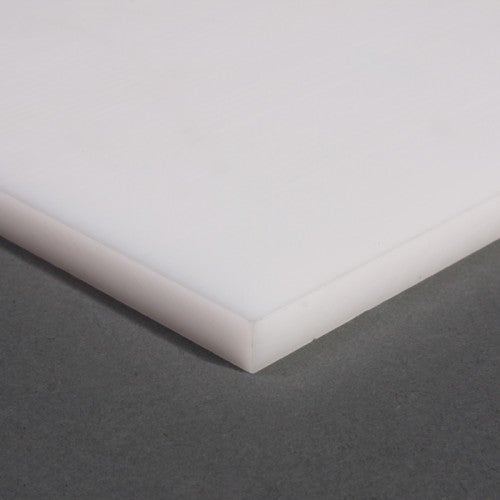
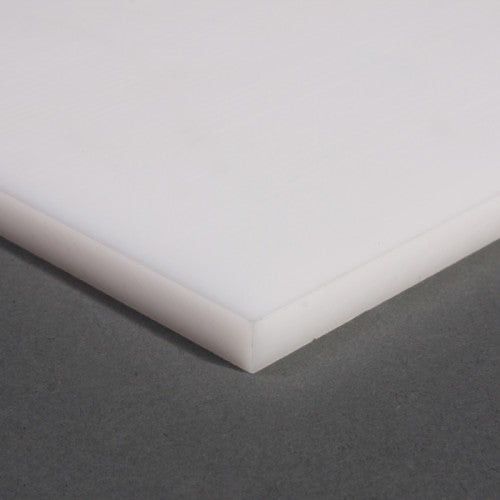
These natural polypropylene plastic sheets provide a robust, versatile solution for fabricating guards, panels, spacers and components in demanding industrial and engineering environments. Supplied in a natural, translucent finish, they offer excellent chemical resistance and high impact strength while remaining easy to machine and handle.
Available in 25 mm to 50 mm thicknesses, these sheets are ideal for use in workshops, factories and maintenance departments where rigid, corrosion‑resistant plastic plate is required. A wide choice of cut sizes, such as 250 mm × 250 mm, 500 mm × 250 mm, 500 mm × 500 mm and 1000 mm × 250 mm, helps minimise waste and reduces cutting time on site.
Product Features
- Material: natural (unpigmented) polypropylene sheet for general engineering and fabrication use.
- Thickness range from 25 mm up to 50 mm for heavy‑duty, rigid applications.
- Supplied in a variety of pre‑cut sizes including 250 mm × 250 mm, 500 mm × 250 mm, 500 mm × 500 mm and 1000 mm × 250 mm, plus many additional options.
- Natural translucent finish for easy visual inspection of underlying components or fluid flow where required.
- Good machinability – sheets can be cut, drilled, routed and fabricated using standard workshop tools.
- Excellent chemical resistance to many acids, alkalis and solvents, making them suitable for corrosive environments.
- Low moisture absorption and good dimensional stability in damp or wash‑down areas.
Key Features and Benefits
- Heavy‑gauge thickness provides outstanding rigidity and impact resistance, extending service life in high‑load or high‑traffic areas.
- Chemical and corrosion resistance reduces the risk of degradation, cracking or swelling in contact with aggressive media.
- Easy to machine and fabricate, helping to speed up production of guards, jigs, fixtures and bespoke components.
- Lightweight compared with metal plate, making handling, installation and maintenance safer and less labour‑intensive.
- Low moisture uptake and good dimensional stability support consistent performance in humid or wash‑down environments.
- Wide choice of stock sizes helps to reduce off‑cuts and material waste, improving overall project efficiency.
Specifications
| Specification | Detail |
|---|---|
| Material | Natural polypropylene (PP) sheet |
| Available thicknesses | 25 mm to 50 mm (nominal) |
| Standard sizes (examples) | 250 mm × 250 mm × 25 mm; 500 mm × 250 mm × 25 mm; 500 mm × 500 mm × 25 mm; 1000 mm × 250 mm × 25 mm (plus additional sizes available) |
| Colour / finish | Natural, translucent polypropylene |
| Service temperature (typical) | Approx. 0 °C to +80 °C (application dependent) |
| Machining and fabrication | Can be cut, drilled, sawn, routed and welded using suitable plastics‑working techniques |
Applications and Ideal Uses
These natural polypropylene sheets are suited to a wide variety of industrial, engineering and fabrication tasks where a rigid, chemically resistant plastic plate is required.
- Machine guards, covers and safety shields in workshops and production lines.
- Fabrication of tanks, trays, drip pans and bunds for chemical handling and storage.
- Structural panels, supports and spacers in process equipment and conveyors.
- Cutting jigs, fixtures and workholding components in engineering and fabrication shops.
- Protective lining panels for walls, benches and enclosures in wash‑down or corrosive environments.
Frequently Asked Questions
Can these polypropylene sheets be cut and drilled with standard workshop tools?
Yes, the sheets can be cut, drilled, sawn and routed using standard woodworking or light metalworking tools fitted with sharp blades suitable for plastics. Care should be taken to support the material and avoid excessive feed rates to achieve a clean finish.
Are the natural polypropylene sheets suitable for outdoor use?
Polypropylene offers good chemical resistance and low moisture absorption, but prolonged exposure to direct sunlight can cause surface degradation over time unless additional UV protection is provided. For long‑term outdoor installations, additional shielding or a more UV‑stable material may be advisable.
Can the sheets be welded or fabricated into tanks and enclosures?
Yes, natural polypropylene can be hot‑air welded and fabricated by experienced plastics fabricators to produce tanks, ducts, covers and other assemblies. It is important to use compatible polypropylene welding rod and suitable welding techniques to ensure strong, leak‑resistant joints.