




Our Clients
Description
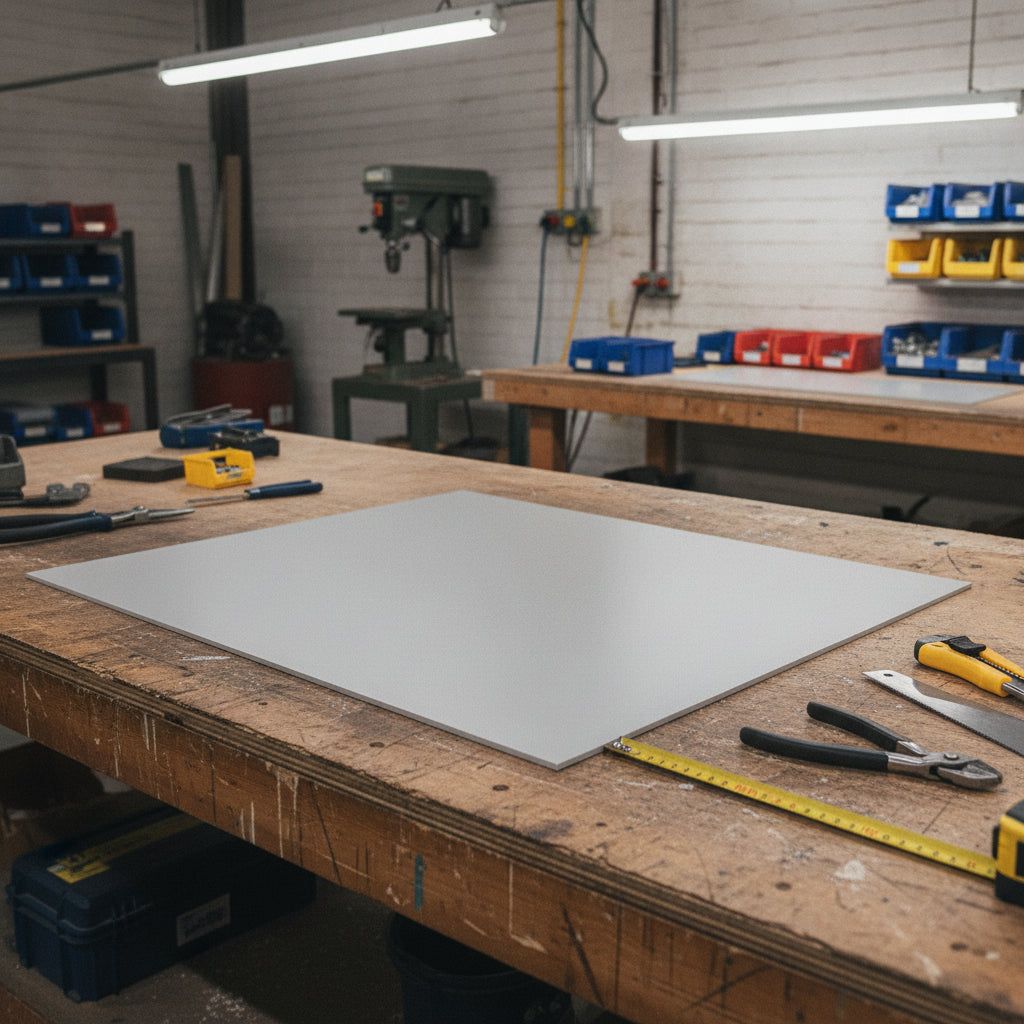
This natural Nylon 6 plastic sheet is a versatile engineering material supplied in a selection of flat panels from 5mm to 10mm thick. Offering a useful balance of strength, wear resistance and machinability, it is ideal for fabricating custom components, guards and structural parts where metal would be over-specified or too heavy.
Commonly used in mechanical, industrial and maintenance applications, these Nylon 6 sheets can be cut, drilled and machined to create bushes, wear strips, spacers, jigs and fixtures. Their natural, unfilled finish provides low friction and good impact resistance, making them a practical choice for workshops, production lines and general engineering projects.
Product Features
- Manufactured from natural, unpigmented Nylon 6 engineering plastic for consistent mechanical performance.
- Available thickness range from 5mm to 10mm to suit both lightweight and more demanding applications.
- Supplied in a wide choice of panel sizes, including 250mm x 250mm, 1000mm x 100mm, 500mm x 250mm and 500mm x 500mm.
- Larger format option of 1000mm x 250mm x 5mm, plus many additional length and width combinations to minimise offcuts.
- Good balance of tensile strength, stiffness and impact resistance for load-bearing components.
- Smooth, low-friction surface suitable for sliding parts, wear pads and guide rails.
- Easily cut, drilled and machined using standard metalworking or woodworking tools.
Key Features and Benefits
- Durable and wear-resistant: Nylon 6 offers excellent abrasion resistance, extending service life in sliding or contact applications.
- Lightweight alternative to metal: Significantly lower weight than steel or aluminium, aiding easier handling and reducing inertia in moving parts.
- Good machinability: Sheets can be turned, milled, sawn and drilled to tight tolerances, ideal for custom components and one-off parts.
- Reduced noise and vibration: The material’s inherent damping properties help to quieten machinery compared with metal-on-metal contact.
- Corrosion-resistant: Resistant to moisture and many oils and greases, making it suitable for use in damp or lubricated environments.
- Cost-effective fabrication: Multiple panel sizes and thicknesses help to minimise waste and material costs on both small and larger projects.
Specifications
| Specification | Detail |
|---|---|
| Material | Nylon 6 (polyamide 6), natural colour |
| Available thicknesses | 5mm to 10mm (nominal) |
| Standard panel sizes | 250mm x 250mm, 500mm x 250mm, 500mm x 500mm, 1000mm x 100mm, 1000mm x 250mm (plus additional size options) |
| Typical service temperature | Approx. -40°C to +100°C (application dependent) |
| Colour/finish | Natural, off-white, smooth sheet |
| Processing | Suitable for cutting, drilling and machining with standard workshop equipment |
Applications and Ideal Uses
These Nylon 6 natural plastic sheets are suitable for a wide variety of industrial and engineering tasks where a strong, machinable and wear-resistant plastic is required.
- Fabrication of wear strips, guide rails and slideways for conveyors and machinery.
- Manufacture of bushes, spacers and bearing blocks for light to medium duty mechanical assemblies.
- Machine guards, jigs, fixtures and support plates in workshops and production areas.
- Prototype components where an easily machined engineering plastic is required.
- General repair, maintenance and fabrication work in factories and plant rooms.
Frequently Asked Questions
Can I cut and drill Nylon 6 sheet with standard workshop tools?
Yes, Nylon 6 sheet can usually be cut with a fine-toothed saw and drilled with standard HSS drill bits. Using sharp tools, moderate speeds and securing the sheet firmly will help achieve a clean finish and accurate dimensions.
Is natural Nylon 6 suitable for outdoor use?
Nylon 6 offers good mechanical performance and moisture resistance, but prolonged exposure to UV and weathering can affect its properties over time. For long-term outdoor applications, additional protection or more UV-stable materials may be advisable.
How do I choose the right thickness and sheet size for my project?
Select the thickness based on the loads, span and stiffness required for the component, and choose a sheet size that allows your parts to be nested efficiently with minimal waste. Where possible, match your design to one of the available panel sizes to reduce cutting and offcuts.