


Our Clients
Description
This high-performance Nylon 6 extruded natural sheet is a versatile engineering plastic designed for demanding mechanical and wear applications. Offering an excellent balance of strength, rigidity and toughness, it provides reliable performance where metals or lower-grade plastics may not be suitable.
With outstanding impact strength and sliding properties, this Nylon 6 sheet is ideal for use in machinery components, guides, bearings, wear strips and structural parts. A wide choice of thicknesses, lengths and widths allows you to specify the right sheet size for both small precision components and large fabricated items.
Product Features
- Manufactured from high-quality extruded Nylon 6 for consistent mechanical performance.
- Natural (unfilled) material for good combination of toughness, wear resistance and machinability.
- Available thicknesses from 0.5 mm, 0.6 mm, 0.8 mm, 1 mm and 1.2 mm, plus a broad range of additional thickness options.
- Sheet lengths offered in 500 mm, 1000 mm, 2000 mm and 3000 mm to suit different project sizes.
- Choice of sheet widths including 620 mm and 1000 mm for optimum material yield and layout.
- Smooth, low-friction surface providing excellent sliding and bearing properties in dynamic applications.
- Good dimensional stability and rigidity, making it suitable for precision-machined components.
Key Features and Benefits
- Excellent impact strength helps reduce the risk of cracking or chipping under shock loads, extending service life of components.
- Low coefficient of friction and good wear resistance make it ideal for sliding parts, helping to minimise noise and reduce the need for lubrication.
- Lightweight alternative to metal, supporting easier handling, lower transport costs and potential weight savings in assemblies.
- Good machinability allows accurate turning, milling and drilling, enabling complex geometries and tight tolerances.
- Resistant to many oils, greases and common industrial fluids, making it well suited to mechanical and plant environments.
- Wide size range supports efficient nesting and cutting, helping to minimise waste and optimise material usage.
Specifications
| Specification | Detail |
|---|---|
| Material | Extruded Nylon 6 (polyamide 6), natural |
| Available thicknesses | From 0.5 mm, 0.6 mm, 0.8 mm, 1 mm and 1.2 mm, plus additional intermediate and larger thickness options |
| Sheet lengths | 500 mm, 1000 mm, 2000 mm and 3000 mm |
| Sheet widths | 620 mm and 1000 mm |
| Colour | Natural (off-white) |
| Typical properties | High impact strength, good wear resistance, low friction, good machinability |
Applications and Ideal Uses
This Nylon 6 extruded sheet is suitable for a wide range of industrial, mechanical and fabrication uses where durable, low-friction components are required.
- Wear strips, chain guides and conveyor components in material handling systems.
- Bushes, bearings, rollers and sliding elements in machinery and equipment.
- Gears, cams, spacers and other precision-engineered mechanical parts.
- Protective liners, impact plates and pads for chutes, hoppers and guards.
- General fabrication, jigs, fixtures and structural panels in workshops and production facilities.
Frequently Asked Questions
Can this Nylon 6 sheet be easily machined with standard workshop equipment?
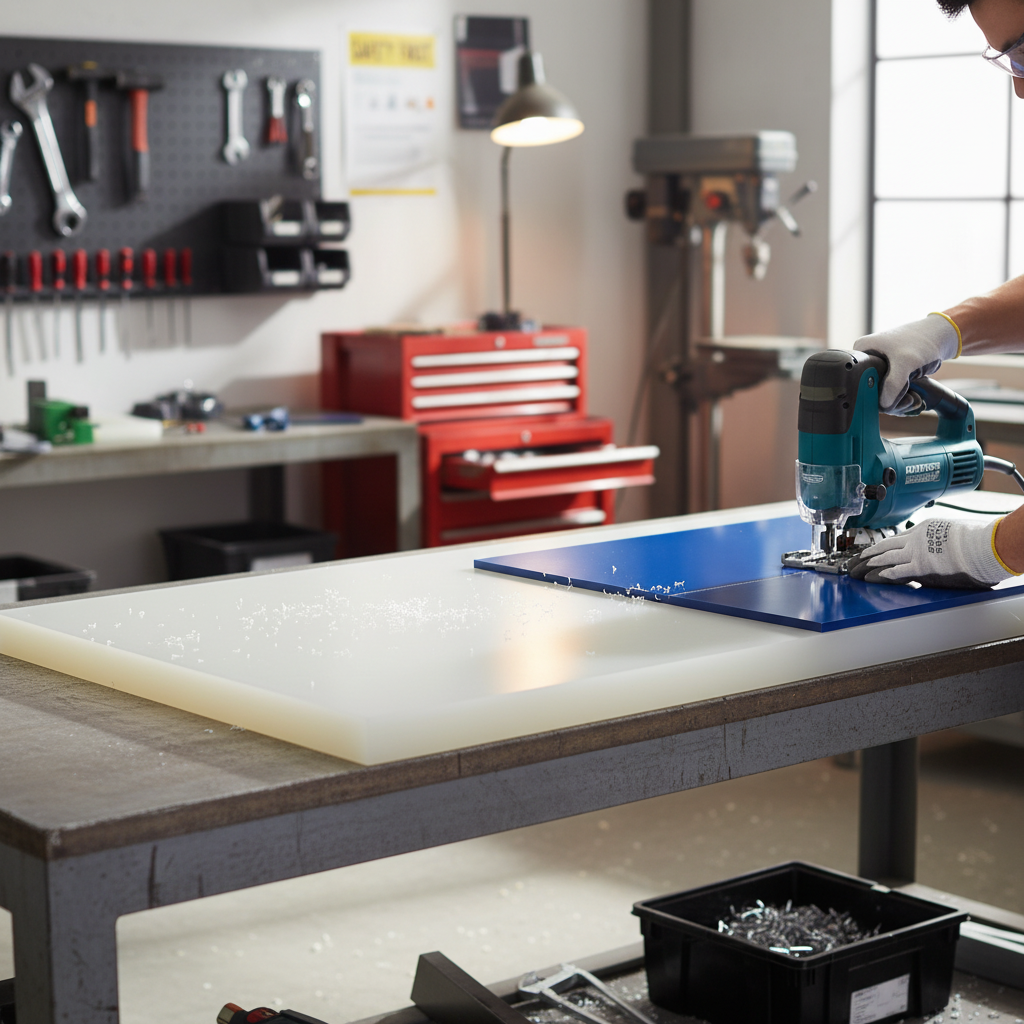
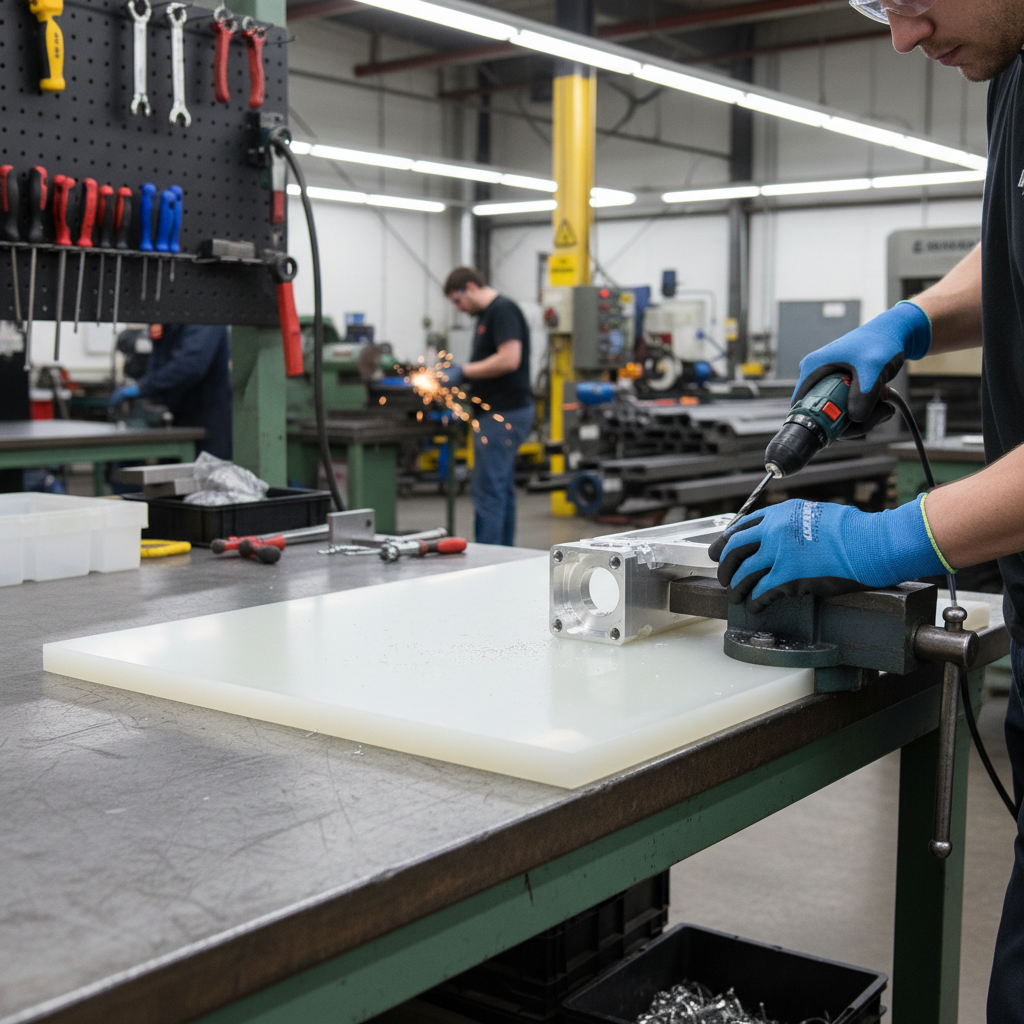
Yes, Nylon 6 machines well using standard metalworking tools such as lathes, mills and saws. Sharp tools and appropriate cutting speeds are recommended to achieve a good surface finish and to help control heat build-up.
Is the natural Nylon 6 sheet suitable for use in contact with oils and lubricants?
Nylon 6 generally offers good resistance to many oils, greases and common lubricants, making it suitable for mechanical environments where such fluids are present. However, for critical applications, compatibility with specific chemicals should be checked.
How do I choose the right thickness and sheet size for my application?
Select the thickness based on the mechanical load, stiffness and wear life required for your part, and choose the length and width that allow you to cut all components efficiently with minimal waste. For highly loaded or structural parts, a thicker gauge may be appropriate, while lighter-duty or space-constrained components can often use thinner sheet.