


Description
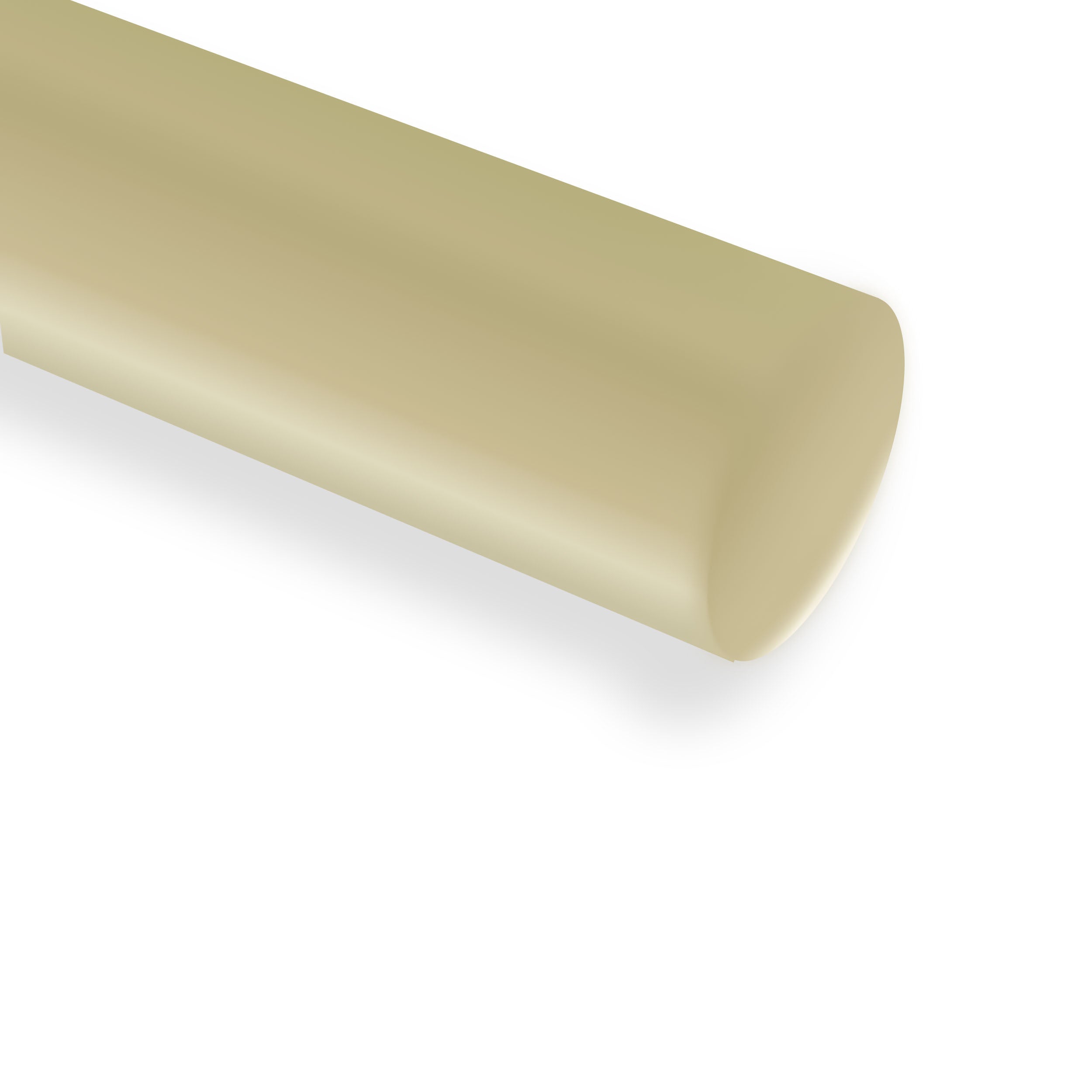
Natural cast nylon 6 (PA6) round bar from 50mm to 200mm diameter, in lengths from 500mm to 3000mm. Cast nylon is the workhorse engineering plastic for heavy-duty wear parts: tough, impact-resistant and hard-wearing, with good natural sliding properties. It is a popular lightweight replacement for bronze, brass and steel in bushes, rollers, gears and wear pads.
- ✔ Excellent wear and abrasion resistance – long life in sliding and rolling parts
- ✔ Very tough and impact resistant, absorbs shock and vibration
- ✔ Low friction – runs quietly with little or no lubrication
- ✔ About one-seventh the weight of bronze, reducing load on machinery
- ✔ Easy to machine – turns, mills, drills and taps cleanly
Sizes
| Diameter | Lengths available | Approx. weight per 1000mm |
|---|---|---|
| 50, 60, 70, 80, 90mm | 500, 1000, 2000, 3000mm | 2.3 – 7.3 kg |
| 100, 110, 120mm | 500, 1000, 2000, 3000mm | 9.0 – 13.0 kg |
| 130, 140, 150, 160mm | 500, 1000, 2000mm | 15.3 – 23.1 kg |
| 170, 180, 190, 200mm | 500, 1000, 2000mm | 26.1 – 36.1 kg |
All prices include VAT. Also available in black cast nylon 6 and graphite-filled nylon 66 for dry-running parts. Need cut pieces or a quantity price? Contact us.
Applications
- Bushes, bearings and wear pads
- Rollers, wheels, pulleys and sheaves
- Gears, sprockets and cams
- Conveyor guides, chain guides and wear strips
- Machined spacers, blocks and prototypes
Specification
| Material | Cast polyamide 6 (PA6, cast nylon) |
|---|---|
| Colour | Natural (ivory) |
| Form | Cast round rod |
| Density (typical) | approx. 1.15 g/cm³ |
| Max. continuous working temperature (typical) | approx. 100°C |
FAQ
Does nylon absorb water?
Yes, nylon absorbs a small amount of moisture, which can slightly change its dimensions. For very tight tolerances in wet conditions, consider our acetal rod instead.
Do you sell smaller diameters?
Our cast nylon range currently starts at 50mm. Contact us if you need a smaller size.
Can you cut it to length?
Contact us with your sizes and quantity for a cut-to-size quote.
All sizes & prices
56 sizes · prices include VAT · tap a price to select that size
| Size | Price | Ex VAT |
|---|---|---|
| 50mm / 500mm | £40.95 | £34.13 |
| 50mm / 1000mm | £70.95 | £59.13 |
| 50mm / 2000mm | £127.95 | £106.63 |
| 50mm / 3000mm | £167.95 | £139.96 |
| 60mm / 500mm | £57.95 | £48.29 |
| 60mm / 1000mm | £105.95 | £88.29 |
| 60mm / 2000mm | £187.95 | £156.63 |
| 60mm / 3000mm | £245.95 | £204.96 |
| 70mm / 500mm | £80.95 | £67.46 |
| 70mm / 1000mm | £142.95 | £119.13 |
| 70mm / 2000mm | £252.95 | £210.79 |
| 70mm / 3000mm | £335.95 | £279.96 |
| 80mm / 500mm | £102.95 | £85.79 |
| 80mm / 1000mm | £185.95 | £154.96 |
| 80mm / 2000mm | £330.95 | £275.79 |
| 80mm / 3000mm | £437.95 | £364.96 |
| 90mm / 500mm | £125.95 | £104.96 |
| 90mm / 1000mm | £227.95 | £189.96 |
| 90mm / 2000mm | £402.95 | £335.79 |
| 90mm / 3000mm | £530.95 | £442.46 |
| 100mm / 500mm | £155.95 | £129.96 |
| 100mm / 1000mm | £280.95 | £234.13 |
| 100mm / 2000mm | £495.95 | £413.29 |
| 100mm / 3000mm | £650.95 | £542.46 |
| 110mm / 500mm | £187.95 | £156.63 |
| 110mm / 1000mm | £337.95 | £281.63 |
| 110mm / 2000mm | £600.95 | £500.79 |
| 110mm / 3000mm | £790.95 | £659.13 |
| 120mm / 500mm | £227.95 | £189.96 |
| 120mm / 1000mm | £407.95 | £339.96 |
| 120mm / 2000mm | £725.95 | £604.96 |
| 120mm / 3000mm | £952.95 | £794.13 |
| 130mm / 500mm | £237.95 | £198.29 |
| 130mm / 1000mm | £425.95 | £354.96 |
| 130mm / 2000mm | £755.95 | £629.96 |
| 140mm / 500mm | £272.95 | £227.46 |
| 140mm / 1000mm | £487.95 | £406.63 |
| 140mm / 2000mm | £867.95 | £723.29 |
| 150mm / 500mm | £312.95 | £260.79 |
| 150mm / 1000mm | £560.95 | £467.46 |
| 150mm / 2000mm | £995.95 | £829.96 |
| 160mm / 500mm | £350.95 | £292.46 |
| 160mm / 1000mm | £630.95 | £525.79 |
| 160mm / 2000mm | £1,120.95 | £934.13 |
| 170mm / 500mm | £400.95 | £334.13 |
| 170mm / 1000mm | £720.95 | £600.79 |
| 170mm / 2000mm | £1,282.95 | £1,069.13 |
| 180mm / 500mm | £432.95 | £360.79 |
| 180mm / 1000mm | £777.95 | £648.29 |
| 180mm / 2000mm | £1,382.95 | £1,152.46 |
| 190mm / 500mm | £497.95 | £414.96 |
| 190mm / 1000mm | £897.95 | £748.29 |
| 190mm / 2000mm | £1,595.95 | £1,329.96 |
| 200mm / 500mm | £530.95 | £442.46 |
| 200mm / 1000mm | £952.95 | £794.13 |
| 200mm / 2000mm | £1,695.95 | £1,413.29 |
Need a size that isn't listed? We cut to order. Request a quote or call 01744 520110.
Supplying UK engineers, manufacturers and public bodies


