


Our Clients
Description
This premium flexible plastic flat top T barb edging is designed to provide a neat, protective finish to exposed edges on panels, boards and sheet materials. Supplied in a convenient 25m coil, it is easy to handle, cut and install, making it ideal for both small projects and larger production runs.
Available in a choice of white or black, and in a range of profile sizes from 15 x 3.5 x 8 x 2 mm up to 50 x 4 x 12 x 2 mm, this edging offers a discreet and durable solution for cladding, furniture, shopfitting, vehicle interiors and general fabrication where clean lines and edge protection are essential.
Product Features
- Flexible flat top T barb edging profile for clean, professional edge finishing.
- Supplied in 25m coils for efficient installation and reduced waste on longer runs.
- Available profile sizes: 15 x 3.5 x 8 x 2 mm, 20 x 3 x 12 x 2 mm, 25 x 3 x 12 x 2 mm, 30 x 4 x 12 x 2 mm, 40 x 4 x 12 x 2 mm and 50 x 4 x 12 x 2 mm.
- Choice of colours: white for a clean, modern appearance or black for a discreet, low-visibility finish.
- Manufactured from flexible plastic to follow gentle curves and irregular edges.
- T-shaped barb design helps the edging grip securely into slots or grooves in panels.
- Suitable for use with a wide variety of board and sheet materials in cladding and profile applications.
Key Features and Benefits
- Provides reliable edge protection, helping to prevent chipping, cracking and impact damage to exposed panel edges.
- Improves appearance by concealing raw cut edges and delivering a uniform, professional finish.
- Flexible construction makes installation straightforward, even around mild curves and corners, reducing fitting time.
- Multiple profile sizes allow you to match the edging closely to your panel thickness and groove dimensions for a secure fit.
- White and black colour options make it easy to coordinate with existing fittings, fixtures and interior or exterior schemes.
- Supplied in long 25m coils to support continuous runs with minimal joints, enhancing both strength and aesthetics.
Specifications
| Specification | Detail |
|---|---|
| Product type | Flexible plastic flat top T barb edging |
| Available sizes (mm) | 15 x 3.5 x 8 x 2; 20 x 3 x 12 x 2; 25 x 3 x 12 x 2; 30 x 4 x 12 x 2; 40 x 4 x 12 x 2; 50 x 4 x 12 x 2 |
| Colour options | White, Black |
| Coil length | 25 metres per coil |
| Material | Flexible plastic edging suitable for cladding and profile finishing |
| Typical installation | Push-fit into matching slot or groove in panel edge |
Applications and Ideal Uses
This flexible flat top T barb edging is suitable for a wide range of edge finishing and protection tasks across commercial, industrial and domestic environments.
- Finishing and protecting edges of cladding panels in interior fit-outs and shopfitting.
- Edge protection on furniture boards, shelving, counters and display units.
- Trim and edge finishing in vehicle, caravan and marine interiors.
- Protective edging for partitioning, panelling and wall linings in offices and workshops.
- General fabrication projects where a neat, durable edge profile is required.
Frequently Asked Questions
How do I install the flat top T barb edging?
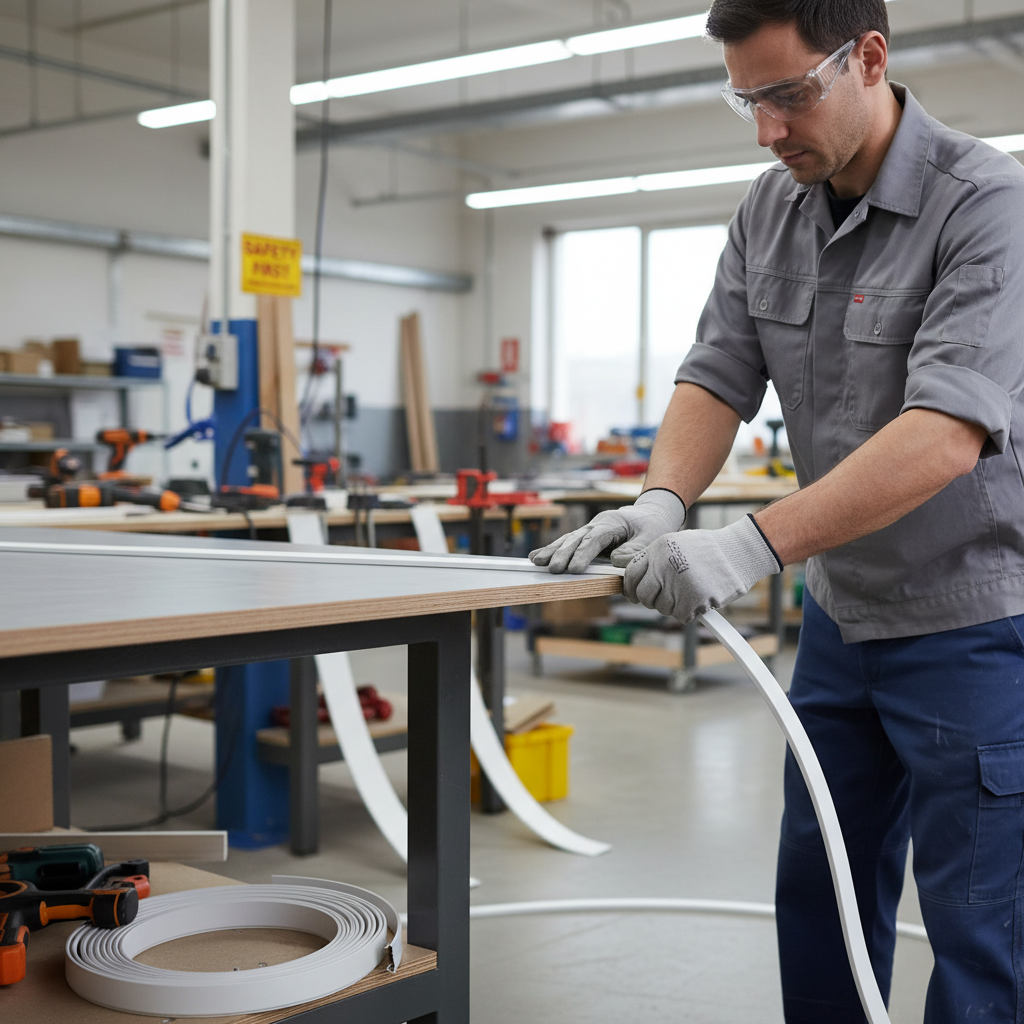
The edging is designed to push into a suitably sized slot or groove in the edge of the panel. Cut the edging to length with a sharp knife or fine-tooth saw, then press the T barb firmly into the groove along the run. In most cases the barb provides sufficient grip; if required, a suitable adhesive can be used to enhance retention.
Which size of edging should I choose for my panels?
Select the profile size that best matches the thickness of your panel and the dimensions of the groove or slot you intend to use. The listed sizes (for example 20 x 3 x 12 x 2 mm or 30 x 4 x 12 x 2 mm) indicate key dimensions of the top and barb sections; check these against your panel and groove measurements to ensure a snug, secure fit.
Can the edging be used around curves and corners?
Yes, the flexible plastic construction allows the edging to follow gentle curves and negotiate corners. For tighter bends, it may help to warm the edging slightly and take care when forming it, avoiding sharp kinks to maintain a smooth, continuous appearance.